
Bracciano is located in the northern part of the in province of Roma, close to the border with the province of Viterbo. The oldest part of the city is on a hill overlooking Lake Bracciano. During the summer months the city is overrun with, mostly Dutch and German, tourists staying at one of the camp grounds near the town.
Bracciano City Guide
Bracciano tourist attractions
Lake Bracciano
For most visitors, the Lago di Bracciano is the main reason to visit the city. Almost everywhere in the historical center you are treated to stunning views of this majestic lake, which is located at a 20 minute walk from the railway station.
Castello Odescalchi

The Castello (Orsini) Odescalchi, although private property, is open for visitors. This extremely well-preserved castle is often used for celebrity weddings.
Piazza IV Novembre

Piazza IV Novembre is the main square of Bracciano. It is surrounded by historical buildings, one of which is the Palazzo Comunale. It also boasts a central fountain, a war memorial, and a stunning view of the castle.
Belvedere della Sentinella
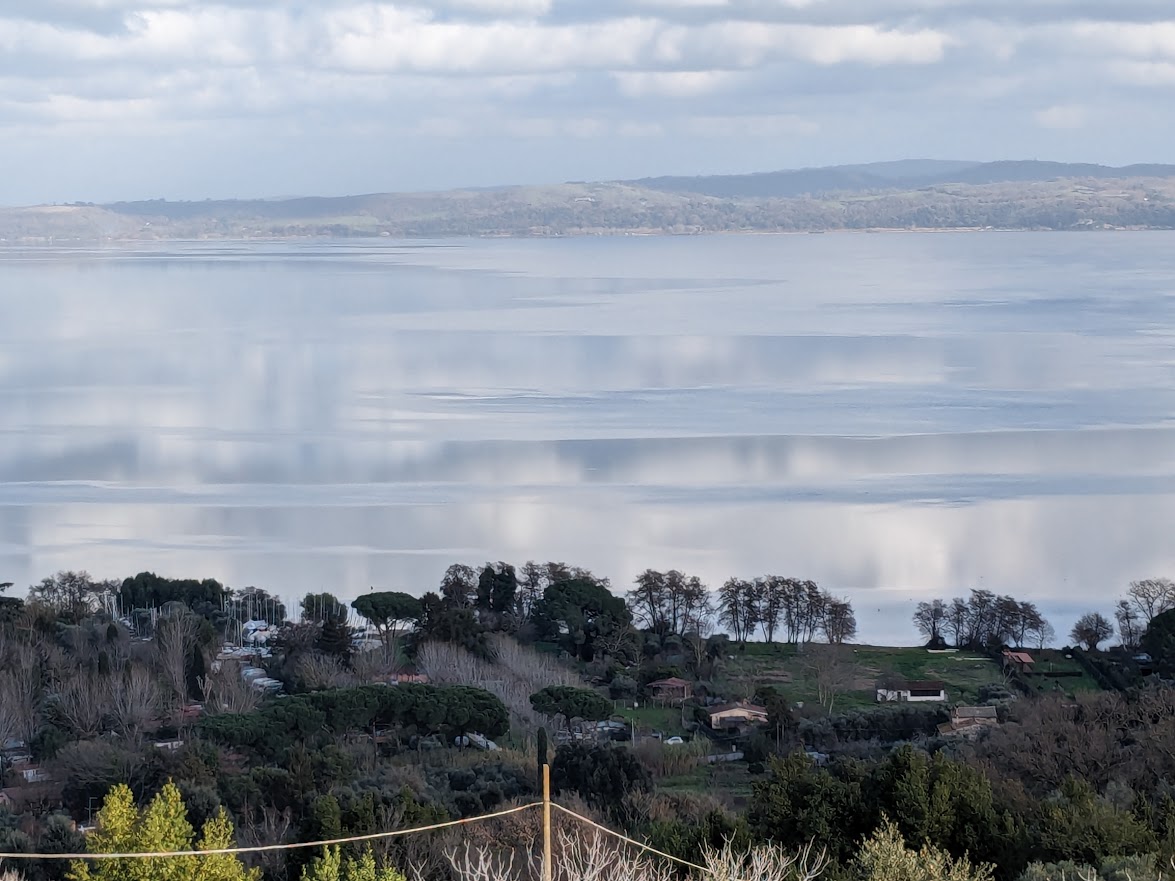
Located at the extreme eastern edge of the historical center, the Bastione della Sentinella offers a beautiful view over the surroundings, including the Lago Bracciano. Formerly one of the main parts of the defensive wall around the city, the Bastione is now a favorite meeting place for Bracciano‘s youth.
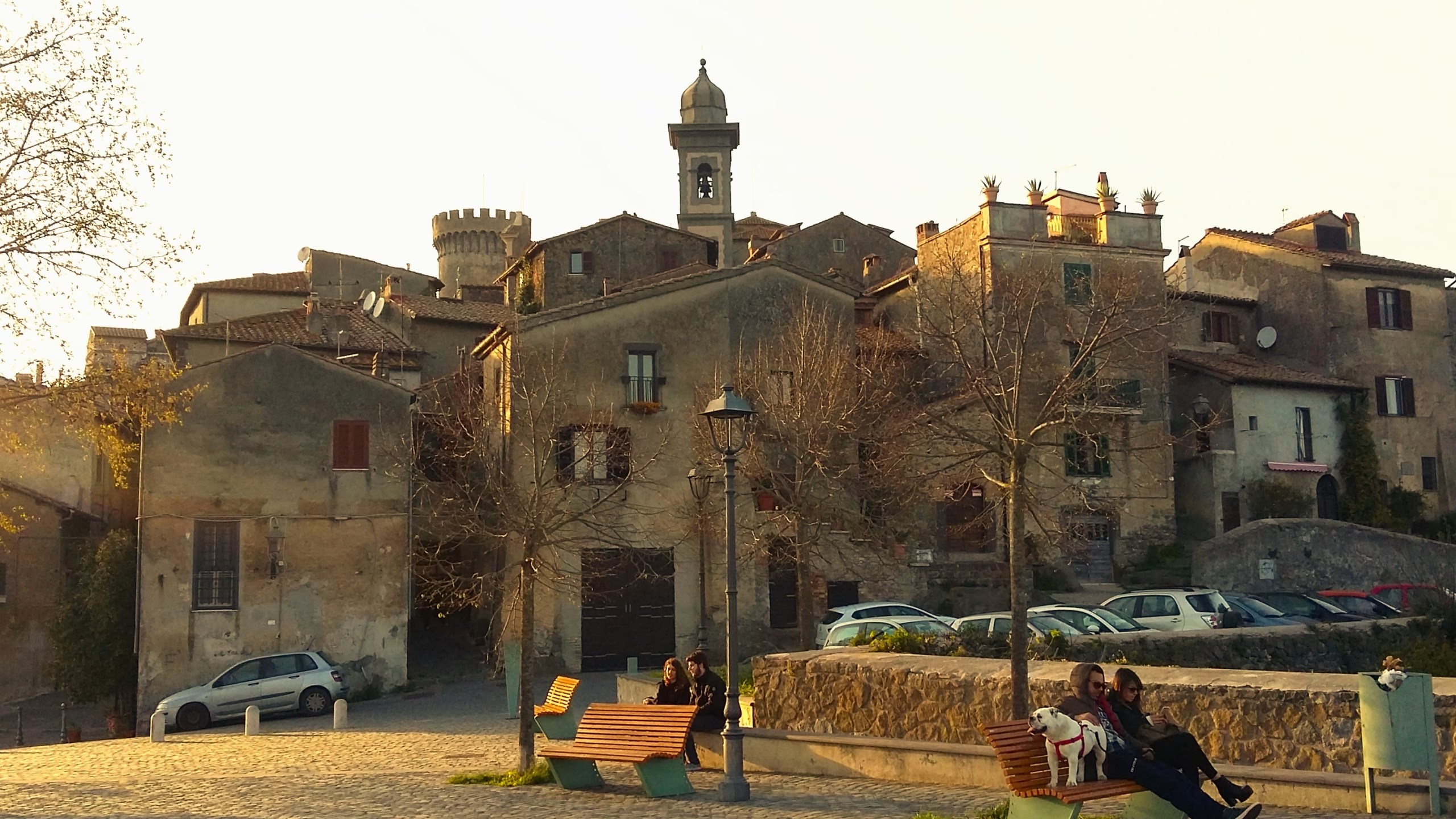
The historical center of the city consists of narrow, winding and sometimes very steep, alleys. These mostly lead from the Belvedere up to the Cathedral and the Castle.
Cathedral of Santo Stefano
The Duomo di Santo Stefano is the main church of Bracciano. The current version of this church stems from the 17th century, although it probably already existed in the 13th century. The church is preceded by a wide staircase and contains works of art dating bac as far as the 14th century.
Museo Civico
Chiesa di San Liberato
The Church of San Liberato is located about 3 kilometers out of the center and boasts an 11th century bell-tower. It is built on the spot where there used to be an old Roman town called Forum Clodii. Most of the present church (including the frescoes) dates from the 15th century. The gardens around the church were designed by Russell Page.
Tourist information office
The tourist office is located in a a small kiosk in the Piazza IV Novembre. The opening hours indicated on the kiosk seem to be extremely approximate. so do not count on anything.
Public transportation from Rome to Bracciano
Bracciano has a railway station on the Rome–Viterbo line. The trip takes around 50 minutes and tickets are 2,50 Euros (2024). From the station it is but a short walk to the historical center and the castle. The walk to the lake takes 20 to 30 minutes. In some sections it is quite steep. There are also buses from the station.


To get to the historical center, turn right when you exit the station, and then left into the Via San Francesco d’Assisi.
A brief history of Bracciano

The place where the town is located was already inhabited in Etruscan times and there was also a Roman settlement.
The first document mentioning Bracciano dates back to 988, when it was still owned by the Prefetti di Vico family.
However, the town really began to develop only in the 15th century, under the Orsini family.
Until the end of the Middle Ages, it was the houses at the edge of the city themselves that were fortified. In the 15th century, because of the threat of ever more powerful firearms, it became necessary to build an actual defensive wall around Bracciano. The Bastione della Sentinella is part of these fortifications.
In the Via Fioravanti, you can still see three medieval tower houses that used to be part of the old defensive works.
A moat was also dug along the south side of what was then the center of town. Wooden drawbridges, later replaced by stone ones, led to the Porta Maria and the Porta Falsa city gates giving access to the center. The street directly south of what used to be the center is still called Via del Fossato (“Moat Street”).
In 1496, thanks to the Bastione, the city managed to defend itself against the troops of Pope Alexander VI. Gentil Virginio Orsini, then feudal lord of Bracciano, had been supposed to stop the French troops of Charles V, who were on their way to attacking the Aragon kingdom of Naples, allies of the Pope. The Orsini, however, secretly sided with Charles V, and gave hospitality to the French. The Pope then declared war on the Orsini and attacked Bracciano. The city was successfully defended by the Braccianesi, who were headed by Orsini’s daughter, Bartolomea.
The entire historical center remained completely protected by a defensive wall until the end of the 17th century. The wall had five towers.
In 1696, debts forced Flavio Orsini to sell the city to the Odescalchi family. This family, except for a brief interruption when the Torlonia ruled there, would continue to hold authority in Bracciano.
The masonry bridge between Piazza Mazzini and Via del Pratoterra dates back to the 1920s. This had become necessary when the Porta Falsa became part of the castle’s private area.
Bracciano suburbs
The following so-called frazioni (suburbs) are part of the municipality of Bracciano: Castel Giuliano, Pisciarelli, Sambuco, Vicarello, Vigna di Valle.
Tourist destinations near Bracciano
Rome | Anguillara Sabazia | Trevignano | Viterbo
Leave a Reply