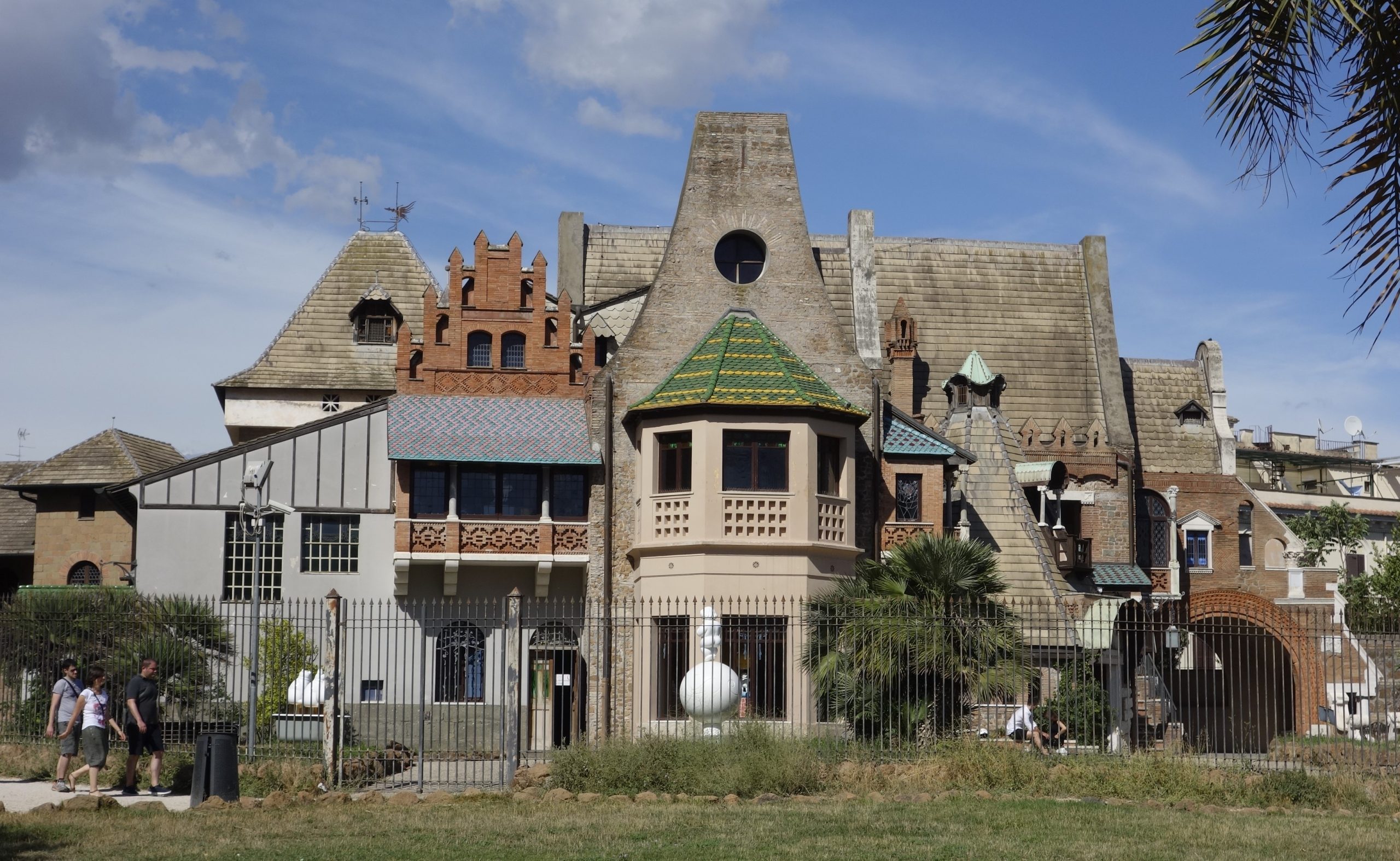
The Casina delle Civette is an art nouveau building in the Villa Torlonia Park in Rome. The “Little House of the Owls” used to be the residence of the Torlonia family. Nowadays, the building is the seat of the Museum of Artistic Stained Glass. Apart from the permanent collection, this museum often organizes temporary exhibitions.
A brief history of the Casina delle Civette in Rome
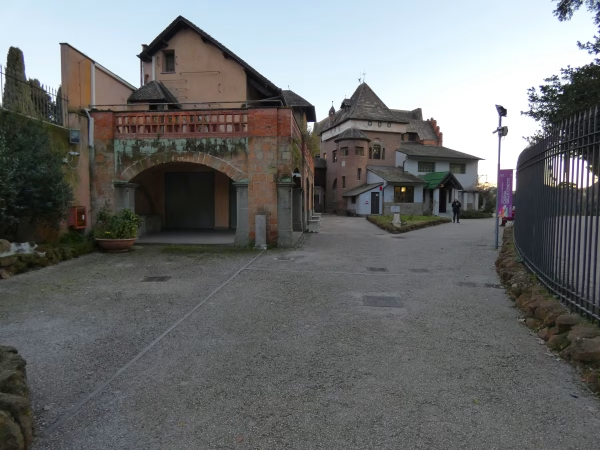
The Casina delle Civette started its existence as the Capanna Svizzera. This “Swiss Hut”, a refuge from the official main residence of the Villa Torlonia, was hidden behind an artificial hill within its grounds.
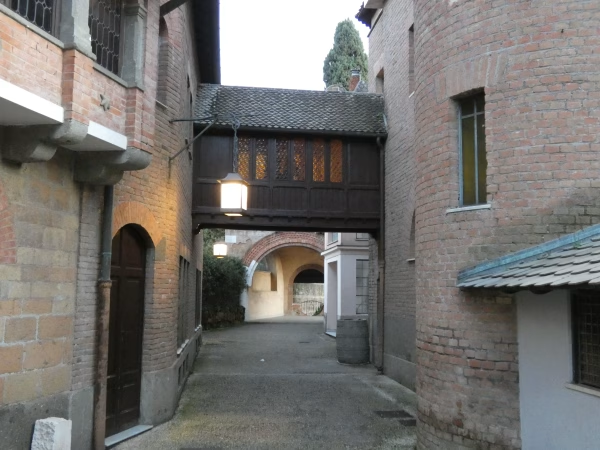
The Capanna Svizzera was designed in 1840, by Giuseppe Jappelli. Of that building, commissioned by Prince Alessandro Torlonia, there is not much left. The present Casina delle Civette consists of a main building, connected to a smaller house by means of a wooden corridor and an underground passage.
In 1914, Duilio Cambellotti added the big stained glass windows. From 1916 onwards it began to be called the Villino delle Civette, because of a big window with two stylized owls surrounded by ivy and numerous other owl-themed decorations inside.
In 1908, Giovanni Torlonia Jr. commissioned a number of modifications. The architect, Enrico Gennari, turned the building into a dream-like structure with big windows, loggias, porticoes, small towers and stained glass windows.
In 1917, Vincenzo Fasolo added the southern part of the building, with its Art Nouveau decorations.
Unfortunately, during the Allied occupation, which started in 1944 and lasted for 3 years, part of the building (and most of the park itself) was demolished.
The city of Rome acquired the Villa Torlonia in 1978, but didn’t do much with it until after a fire caused ulterior damage in 1991.
In 1992 restoration work was started. It took 5 years to bring the park and the Casina back to its original splendour.
What to see in the Casina delle Civette
The most obvious element amongst the many ornaments present in the Casina delle Civette is formed by the numerous stained glass windows. These were all done by the Cesare Picchiarini‘s workshop after designs by Duilio Cambellotti, Umberto Bottazzi, Vittorio Grassi and Paolo Paschetto. Apart from the windows themselves, you can also admire Cambellotti’s designs for other projects.
The art of polychrome stained glass experienced a revival in the early 20th century. Artists designed the cartoons for the windows, and craftsmen finished the work.
The most recurring element in the decoration is the owl, which is not only depicted in the windows, but also on the capitals and on the wallpaper of some of the rooms. Bats and griffins are also often represented.
Highlights
Room of the Owls
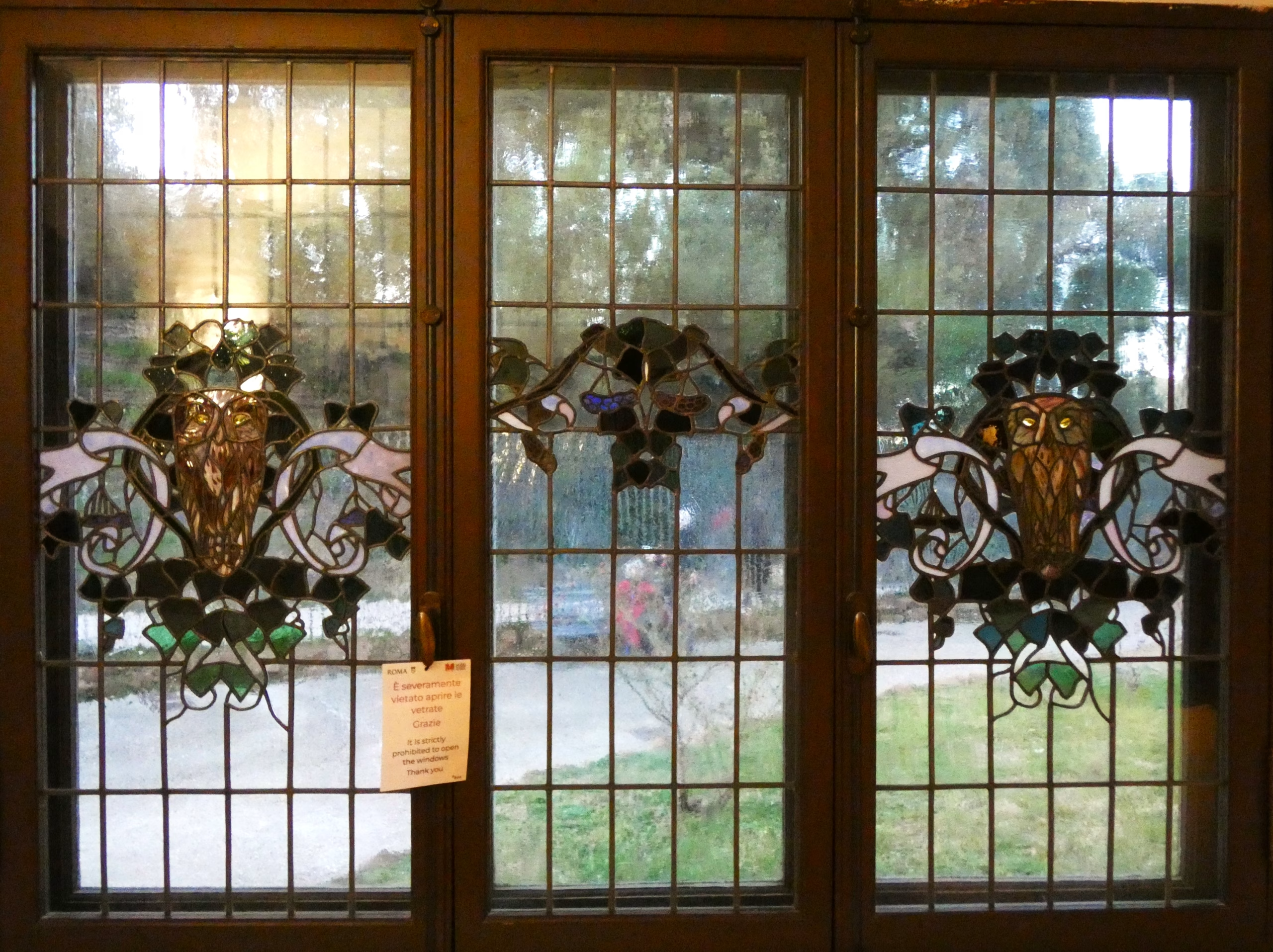
The only original decorative element that remains is the stained glass window, composed of three panels by Duilio Cambellotti. The little owls are made from coloured glass, partly painted with flame, to improve the effect of the plumage.
Opening hours and ticket price
The Casina delle Civette can be found in the Villa Torlonia Park (Via Nomentana 70 – 00161 Rome). District: Quartiere Nomentano. Opening hours: Tuesday to Sunday from 9 AM to 7 PM. (December 24 and 31: 9 AM to 2 PM. Closed: Mondays, May 1, December 25. Admission: 6 Euros (reduction: 5 Euros). Combi-pass Casina delle Civette + Casino Nobile: 9,50 Euro (reduction: 7,50 Euros). Admission is free for Rome residents on the 1st Sunday of each month. Roma Pass is valid.
Leave a Reply