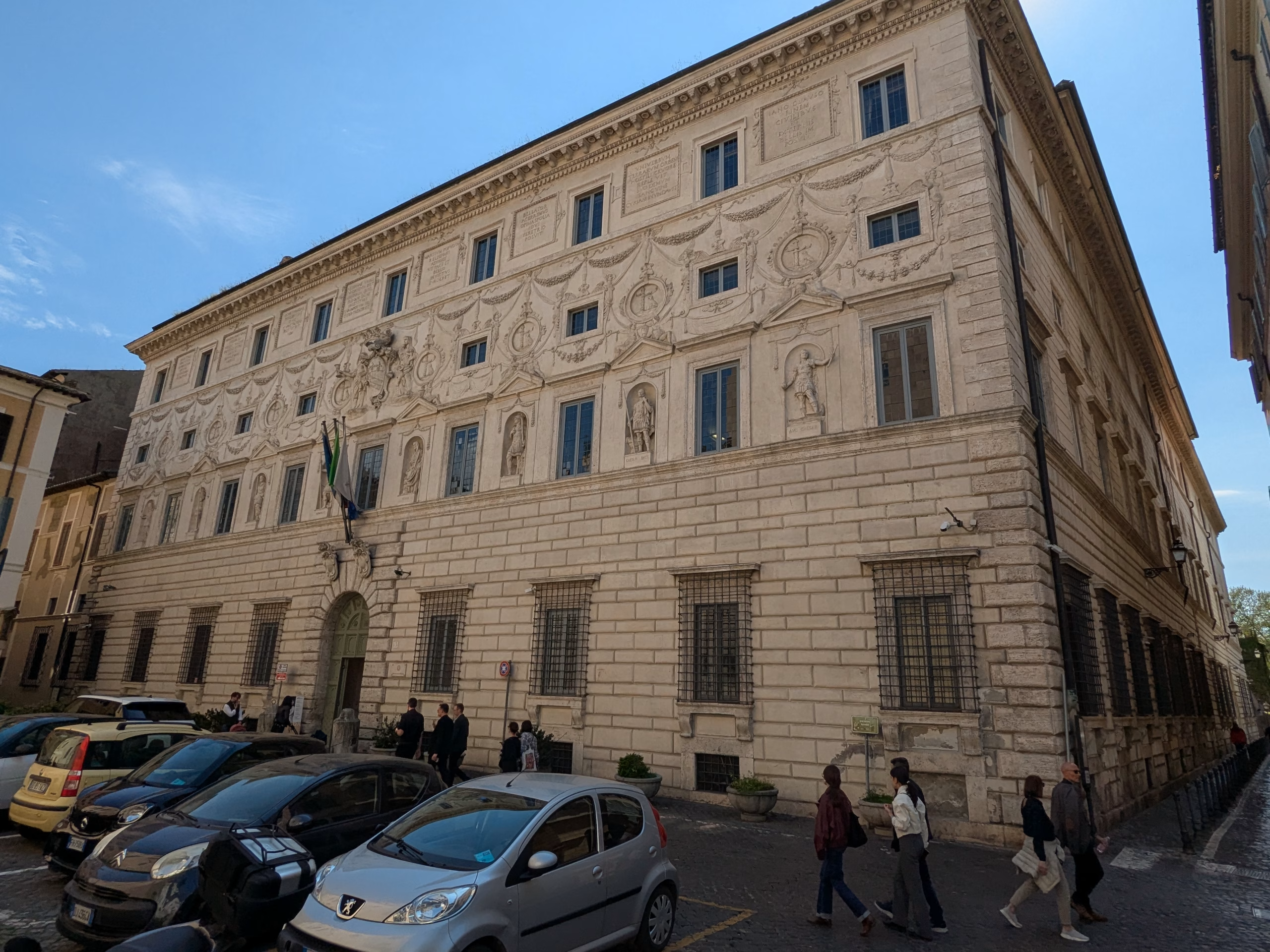
The Galleria Spada is a small museum in Rome. It is housed in the Palazzo Spada in the historical center of the city, just off the Campo de’ Fiori. The main attraction of the museum is a 60cm tall statue.
A brief history of the Galleria Spada in Rome
Cardinal Bernardino Spada was a passionate art collector. After having purchased the palazzo in 1632, he started a collection of paintings, to which some of his nephews also contributed in later years.
Unfortunately, after the Italian State acquired the Palazzo Spada (1936), many of the paintings were moved to other galleries and museums.
The current exhibition, spread out over 4 rooms, still includes many of the masterpieces collected by Bernardino. These include works by a.o. Guido Reni and Guercino (each represented with a “Portrait of Cardinal Bernardino Spada”).
What to see in the Galleria Spada
Borromoni’s perspective
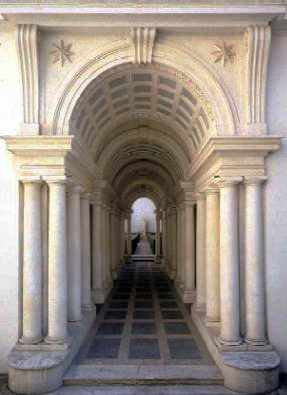
Through a window on the left side of the courtyard it is possible to see the main attraction of the Palazzo Spada. By juxtaposing two rows of columns in a very precise manner, Borromini has created such an optical effect that the 8 meter long gallery appears to have a length of 37 meters. The “life-size” statue at the end of the corridor is in reality only 60 centimeters tall. The effect was obtained by gradually raising the floor, gradually lowering the ceiling and making the columns smaller and smaller.
More Galleria Spada highlights
The pictures are displayed in a way that was typical of the 17th century, frame to frame, with smaller pictures above the bigger ones. There are also sculptures, both antique and modern, and two 17th century world maps by the Dutchman W. Blaeu.
Picture highlights include
- Guercino (Death of Dido, as well as a portrait of the Cardinal)
- Titian‘s “Portrait of a Musician”.
- Brueghel the Elder (“Landscape With Windmills”).
Address, opening hours and admission
Address: Piazza Capo di Ferro, 13 – Rome (tel. +39 06 6832409 or 06 6874896). Opening hours: 08.30 till 19.30. Closed: Mondays, January 1, December 25. Admission: 5 Euros. Admission is free on the first Sunday of every month.
The ticket includes a visit to the picture gallery and Borromini‘s perspective.
Leave a Reply