Mazzano Romano is a municipality in the province of Rome. It is located about 40 kilometers north of the Italian capital. Apart from its medieval town center, it is mostly popular because it is one of the two main villages in the Valle del Treja natural park, the other one being Calcata. Several hiking trails connect the two villages.
What to see in Mazzano Romano
Palazzo Biscia and city gate
An arched entrance, incorporated in the Palazzo Biscia, gives access to the historical center. From the entranceway, a circular street winds through the medieval center. This center is characterized by winding streets following the contours of the cliff.
Palazzo degli Anguillara
The 15th century Palazzo di Everso e Dolce degli Anguillara towers over the circular streets winding through the center. The oft renovated building is also known as Palazzo Tocchi.
Piazza dell’Antisà
Archaeological digs in the Piazza dell’Antisà have brought 9th and 10th century AD glaze pottery to light.
Church of San Sebastiano
The small church of San Sebastiano, located in the Piazza Umberto I, was built in 1465. The church features frescoes from around 1510. The apse fresco depicts the martyrdom of Saint Sebastian between Saint Roch and Pope Saint Gregory. The one on the left wall depicts the Madonna and Child with Saint Anne.
Church of San Nicola di Bari
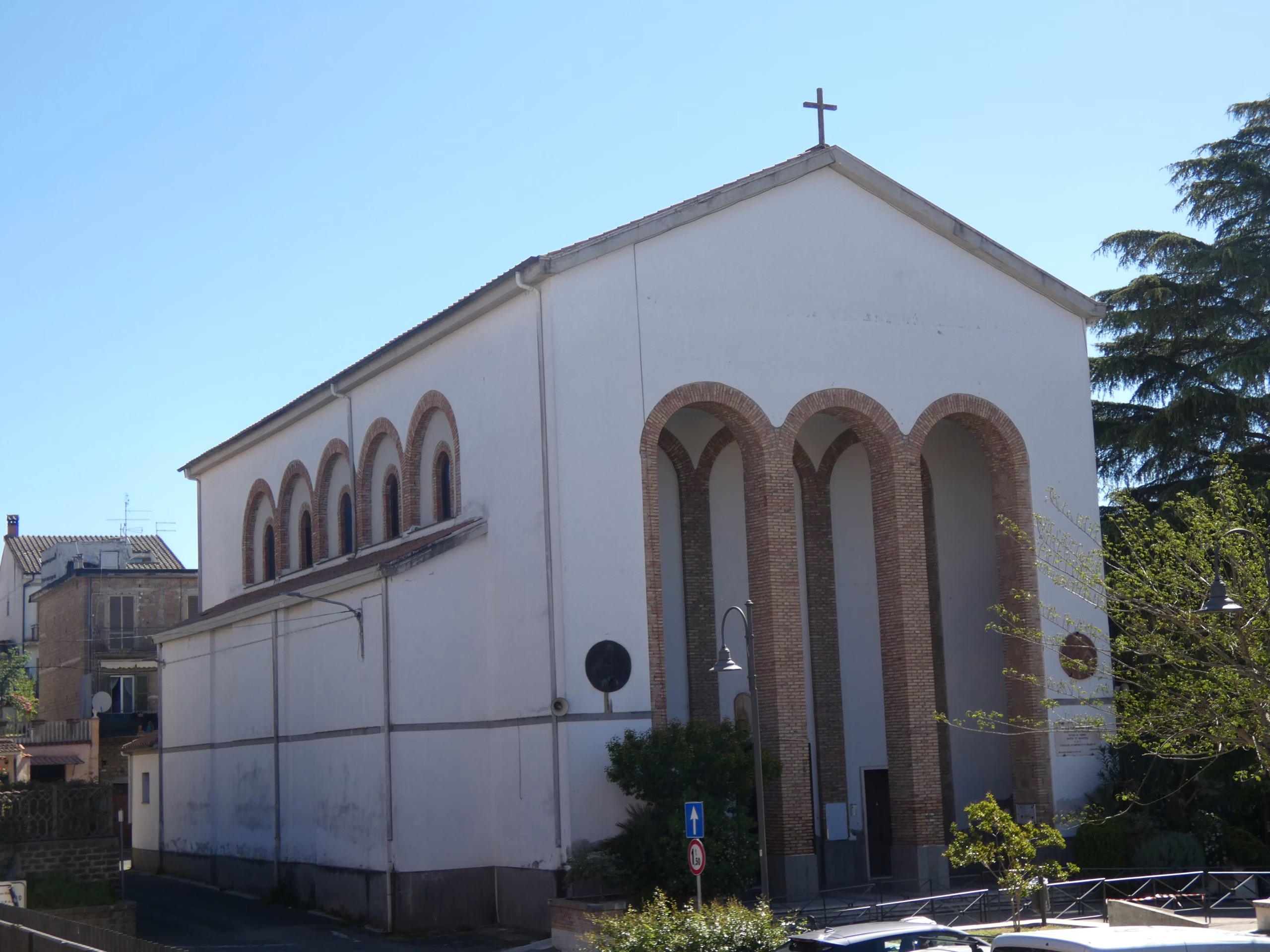
The church of San Nicola di Bari dates back to the 1950s. It replaces an older version which was destroyed in 1940, because it was in danger of collapsing. The original 16th century church, built to a design by Jacopo Barozzi da Vignola, was located in the Piazza dell’Antisà.
Palazzo del Drago
The Palazzo del Drago overlooks the entrance to the historical centre. The old town hall, constructed around 1746, is located just inside the gate.
Palazzo de Rosa
The Palazzo de Rosa possibly dates back to the 13th century.
Parco del Valle del Treja
Mazzano and Calcata are the two main villages in the Parco del Valle del Treja. There are various
MAVNA
The MAVNA (Museo archeologico virtuale di Narce) is located just outside the city gate, in a building that also hosts the library, the police station and other public offices. The museum’s aim is to shed light on the ancient Faliscans, an Italic tribe living in the area around the Valle del Trejo.
A brief history of Mazzano
The history of Mazzano begins in the early Middle Ages. It is first mentioned in the Capracorum domus culti. The Domuscultae were a type of large-scale farm that was widespread between the 8th and 11th centuries within the papal estates, and particularly common in the Roman countryside.
In the 10th century, ownership of Mazzano was transferred from Alberico II to the Monastery of the Saints Andrea and Gregorio at the Celio Hill in Rome. The transfer included “the servants of both sexes”. Of the then existing fortifications of the village, hardly anything is left standing apart from ruins of some towers.
In 1426, the monastery leased Mazzano to Everso Anguillara, member of an influential family that also owned nearby Calcata and Faleria. The family quickly assumed full ownership, but had to return the village to the monasterey in 1475. In 1526, however, the Castrum Mazani was finally sold to Giovanni Battista Anguillara da Stabia. In 1599, the Anguillara sold the fiefdom to Cardinal Leo Biscia. The Del Drago family inherited the village in 1658, and kept ownership until the 1950’s.