The Museo del Colle del Duomo (“Museum of the Hill of the Cathedral”) is housed in the Palazzo dei Papi in Viterbo. The museum is divided into an archaeological section, a historical-artistic section and a section dealing with sacred art.
A brief history of the Museo del Colle del Duomo in Viterbo
Archaeological section
The first section covers the Villanovan, Etruscan, Roman and medieval periods. The oldest piece is a biconical Villanovan vase with geometric carvings dating back to the 10th-8th century BC.
The archaeological section also includes a cemetery area found on the grounds of the Palazzo dei Papi itself. The area is thought to have been in use from the 12th till the 18th century.
The Goddess of Abundance statue is the highlight of the Roman section.
The medieval period is best represented by an arch decorated with plant motifs that are being devoured by fantastic beasts.
Historical-artistic section
The artworks in this section cover a period stretching from the 13th to the 18th century.
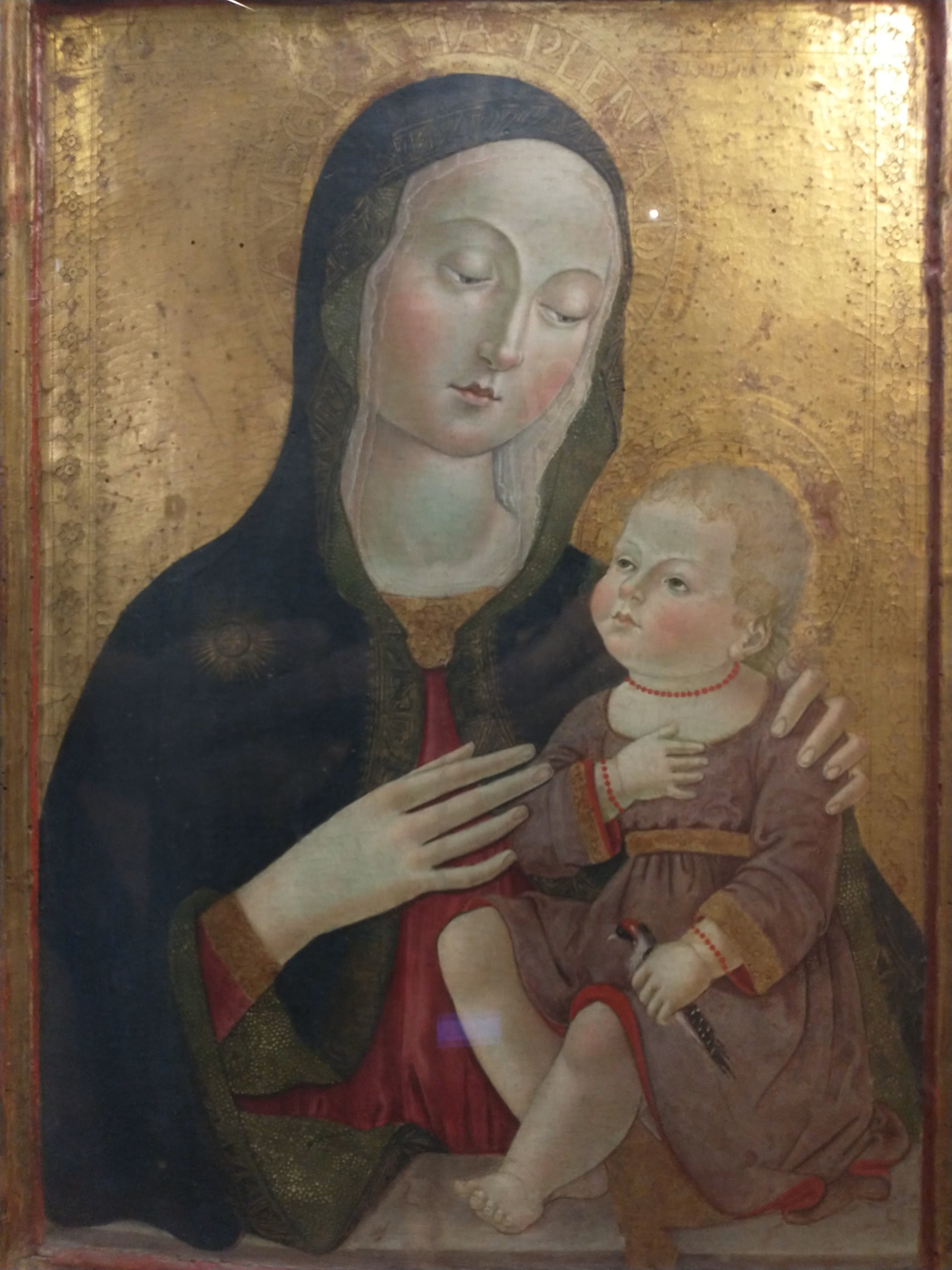
One of the highlights is the 15th century tempera on wood painting “Madonna and Child”, by Benevenuto di Giovanni. The star on the Madonna’s right shoulder and the bird in the child’s hand symbolize “Virginity” and the “Passion of Christ”, respectively.
The “Madonna della Carbonara”, called thus because it originally graced the Chiesa della Carbonara, was painted in the 13th century. According to legend, it had been donated to the city by the Knights of Rhodes.
The “Crucifixion”, dating from the fist half of the 16th century, has been attributed to Michelangelo’s workshop, although this has not been proven beyond doubt.
Bartolomeo Cavarozzi‘s “Virgin and Child” was painted in 1625.
In the anonymous painting “Santa Rosa da Viterbo”, the local saint is depicted walking on flames fed by burning heretic books. An angel on her right holds a lily (symbol of purity).
Sacred art
The reliquary of San Lorenzo is a 15th century work with some Gothic elements.
The goblet of Canepina stems from the same period.
The 14th century reliquary containing the jaw of John the Baptist was found in the Cathedral of Viterbo.
There are several models the local sculptor Francesco Nagni (1897-1977) made for his bronze artworks. Nagni is mostly known for making the tomb of Pope Pius IX in the Vatican in Rome.
What to know before your visit to the Colle del Duomo Museum
Opening hours
- April to October: Every day from 10:00 till 19:00.
- November to March: Weekdays from 10:00 till 13:00 and from 15:00 till 18:00. Saturdays and Sundays from 10:00 till 18:00. Closed on Tuesdays.
- Last entrance is one hour before closing time.
Admission
- A ticket for the Museo del Colle del Duomo is 3 Euros.
- A combi-ticket is 10 Euros and includes, apart from the museum, the Palazzo dei Papi and the Cathedral of San Lorenzo.
Address
Address: Piazza San Lorenzo, 8 – Viterbo.
Sources
- Brochure “Colle del Duomo Museum”, provided by the museum itself.
- Photos are my own, unless otherwise indicated.