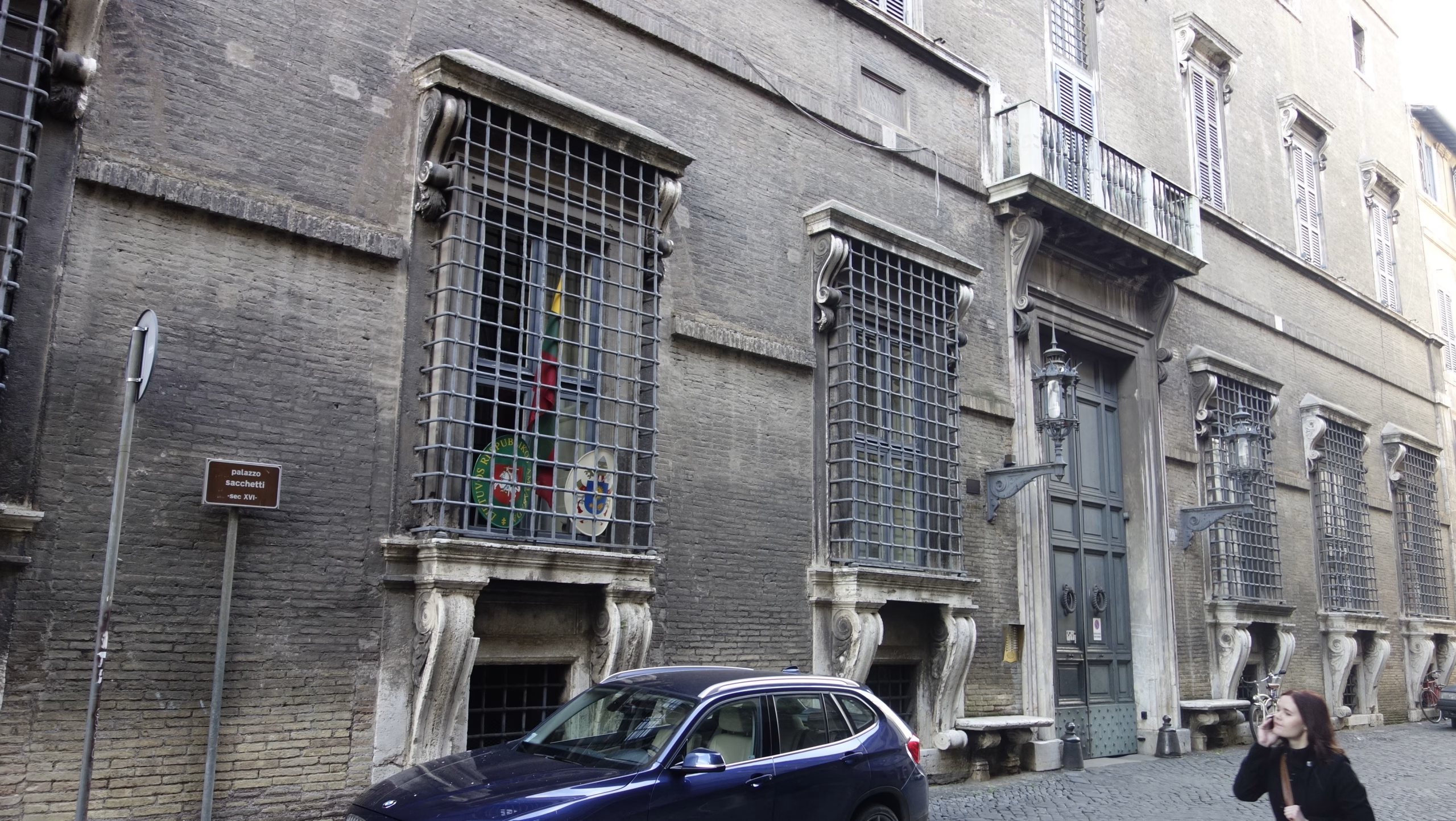
Of all the beautiful buildings on the Via Giulia in Rome, the 16th century Palazzo Sacchetti is perhaps the most impressive one. The most famous room in this palace built by Antonio da Sangallo il Giovane for himself is the Sala dei Mappamondi.
A brief history of the Palazzo Sacchetti in Rome
The Palazzo Sacchetti was designed and built in 1542 by the famous architect Antonio da Sangallo il Giovane. The inscription to the left of the balcony indicates that he himself used to live there: Domus Antonii Sangalli Architecti – MDXLIII. I
After the death of the architect it was sold to the Ricci family from Montepulciano. They had the building restored and enlarged by Nanni di Baccio Bigio.
In 1648, the Florentine Marquis Sacchetti bought the palace. The reason they chose to live in the Villa Giulia is probably that the Florentine national church is located in the street.
The Sacchetti family owned a vast collection of paintings, which in 1748 was acquired by Pope Benedict XIV. The Pope donated the paintings, which came to constitute the first nucleus of the Pinacoteca of the Capitoline museums, to the people of Rome.
Palazzo Sacchetti is one of the taller buildings in the street. Its facade is characterized by large stone blocks and a balcony above a tall marble portal. The windows are screened by large iron grilles.
Fontana del Putto (Fountain of the Cupid)
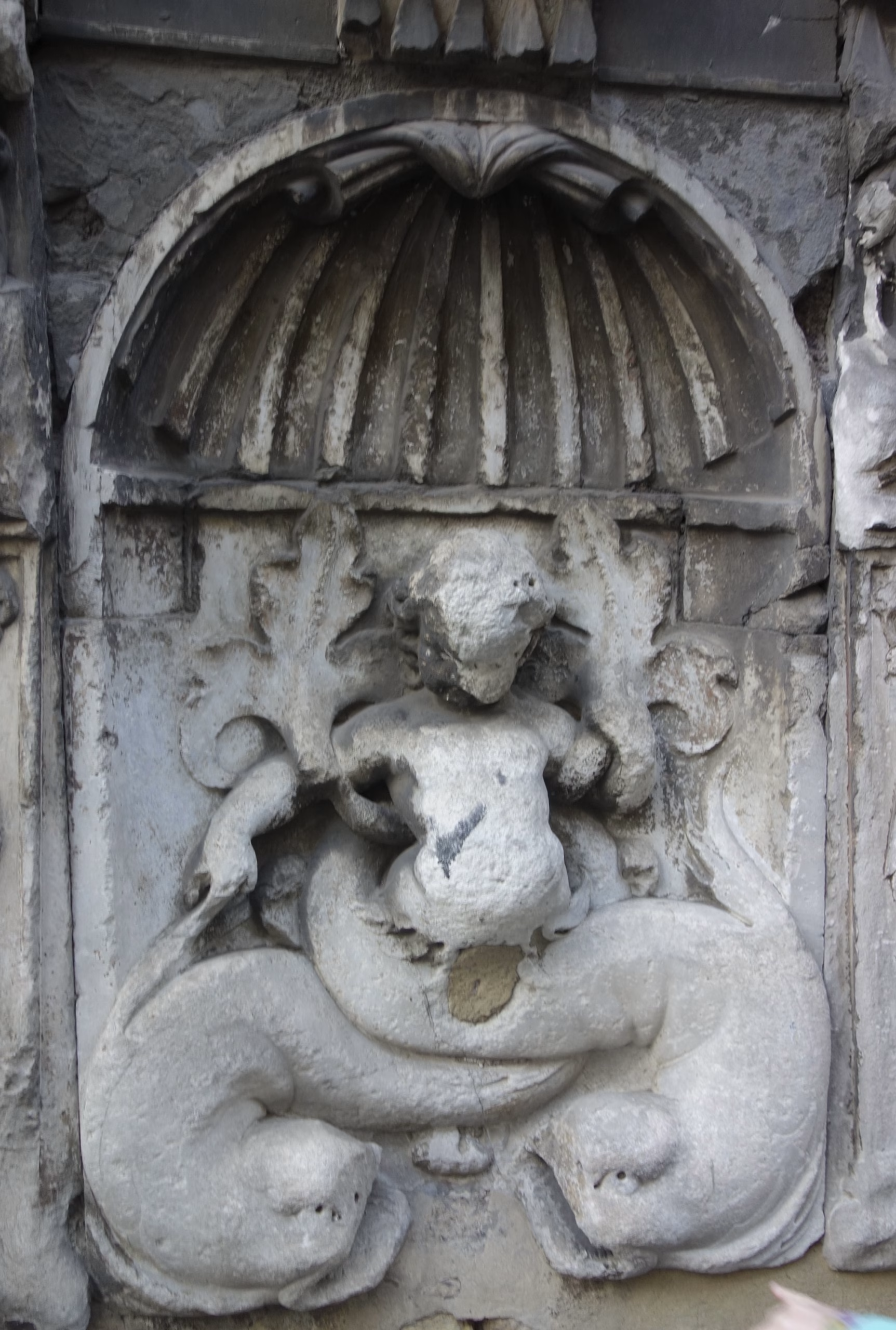
The facade facing Via del Cefalo is similar. The small, very badly maintained, fountain with a cupid and two dolphins on the corner dates back to the 16th century. The name of the sculptor is unknown, although both Sangallo the Younger and Nanni di Baccio Bigio are possibilities. It was probably restored in the 18th century, under Pope Clement X Altieri. The two dolphins used to spout water into a no longer existing basin.
What to see

The Salone dei Mappamondi is the most famous room in the palace. The room is named after two large 17th century globes, made by the cosmographer Vincenzo Coronelli. One of them depicts the earth, the other the starry sky.
Francesco Salviati painted the “Events in the Life of David” (1554) in the Reception Hall (Sala dell’Udienza).
The hall is graced by the “Holy Family with Adam and Eve” by Pietro da Cortona.
The courtyard has a portico, with a 15th century “Madonna and Child” formella.
From the courtyard there is a staircase to the apartments on the upper floors.
The garden covers an area of almost 700 square meters and is decorated with fountains, statues and a nymphaeum. The latter, decorated with enormous female heads, is visible from the Lungotevere.
Useful information
Address: Via Giulia, 66. Unfortunately, the palace is not open to tourists.
Sources
- Ravaglioli, Armando – Vedere e capire Roma (1980).
- Rerum Romanum website.
- The photos of the exterior are my own.
Leave a Reply