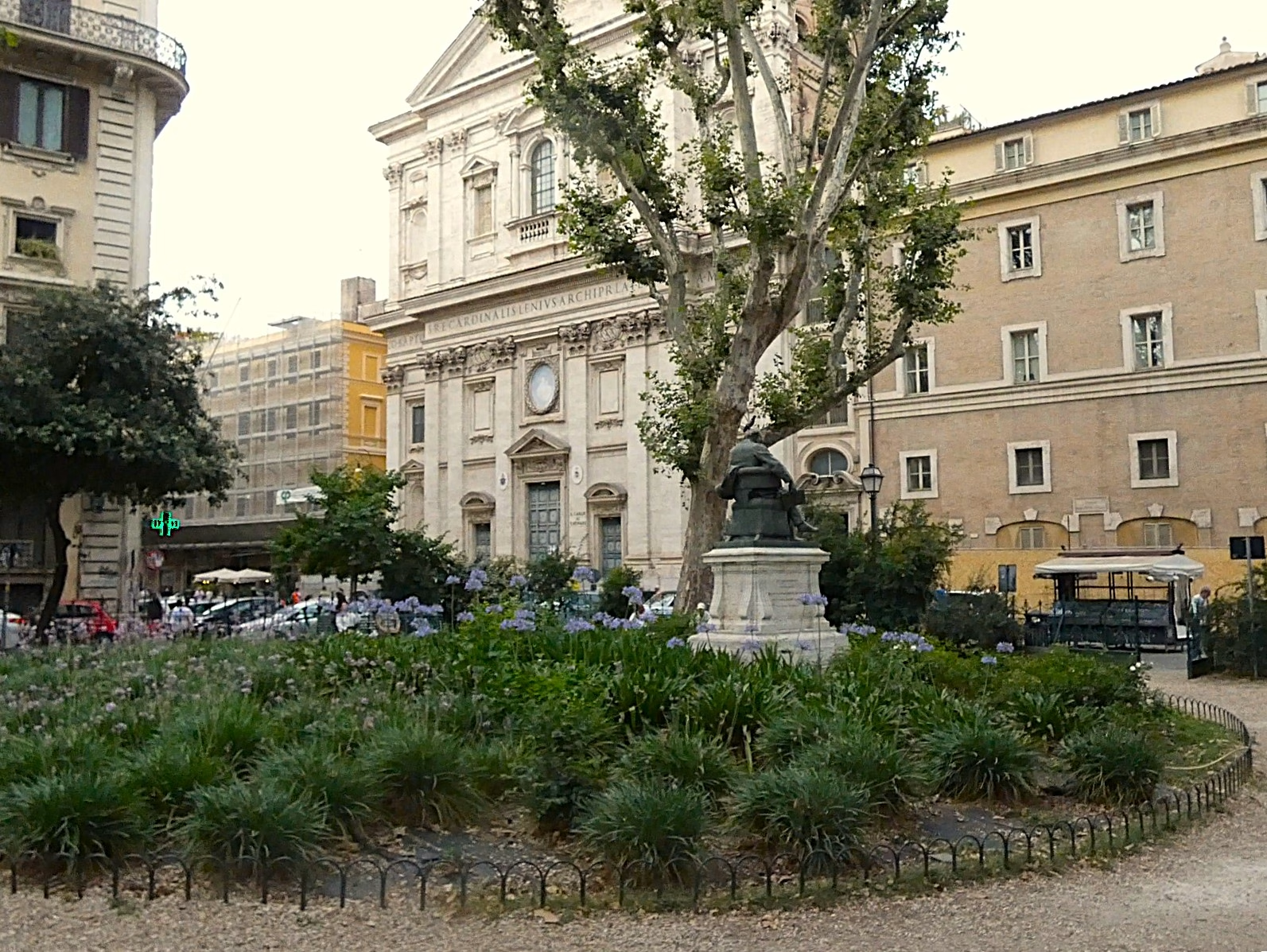
Piazza Benedetto Cairoli is a square along the Via Arenula in the Sant’Eustachio neighborhood in the center of Rome. It is named for one of Garibaldi‘s helpers. The main attractions flanking the square are the church of San Carlo ai Catinari and the Palazzo Santacroce. The garden is decorated with a statue of another freedom fighter and a fountain.
A brief history of the Piazza Benedetto Cairoli in Rome
Benedetto Cairoli was one of Garibaldi‘s closest helpers in his fight for the unification of Italy. He later became a politician, serving as prime minister and minister of foreign affairs. Cairoli, as a plaque on the wall indicates, used to live in the Palazzo Tanlongo.
The square used to be sometimes referred to as Piazza Tagliacozzo. This was because Isabella Orsini, originally from the city of that name, used to own several houses around the square.
Piazza Cairoli was widened several times. The most significant change occurred at the end of the 19th century, when the Via Arenula was constructed. In order to create the oval garden, several buildings first had to be demolished. The most important ones were the Palazzo Branca and the Church of San Biagio de Cacabarii.
What to see in and around Piazza Benedetto Cairoli
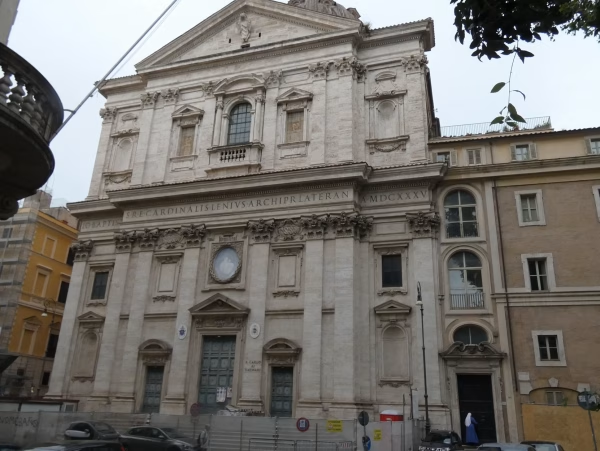
The main point of interest is the church of San Carlo ai Catinari. Originally constructed in the 17th century, it later got a neoclassicist facelift by Vespignani. Highlights are plaster models of the huge statues of the saints Peter and Paul in St. Peter’s Square, and paintings by Pietro di Cortona, Guido Reni and Lanfranco.
The Palazzo Santacroce (alla Regola) was built in various stages, between 1598 and 1668. The original design was by Carlo Maderno, who continued to work on it until 1602. Between 1630 and 1640, Francesco Peparelli finished the work. The construction had been commissioned by Onorio Santacroce. The building has a fountain depicting the Goddess Venus in its courtyard.
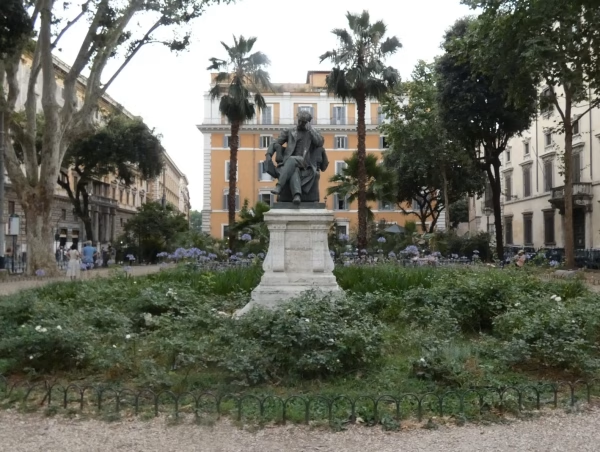
The bronze statue near the entrance does, surprisingly, not depict Cairoli himself. The statue of the freedom fighter and politician Federico Seismit Doda was sculpted in 1919 by Eugenio Maccagni. He is depicted seated, holding a book that appears to be falling from his hands.
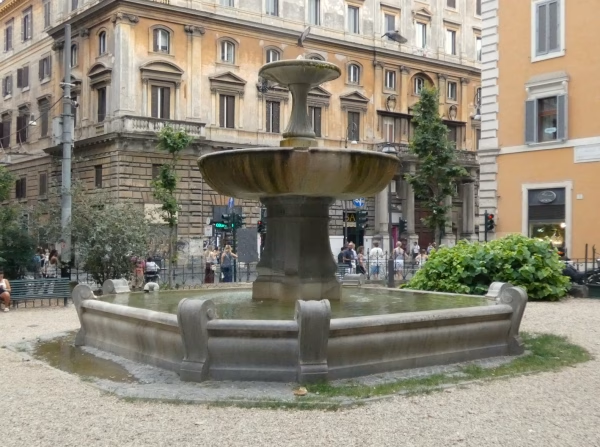
The fountain in the back of the garden dates from 1888 and was designed by Ed André. It consists of a square granite basin with a central pillar. The basin originates from the Roman Forum, but stood in the Piazza Cenci until 1887. The pillar was originally decorated with a trident surrounded by bronze dolphins. The trident supports an ancient round basin, containing a thinner pillar with a smaller basin.
Address and public transportation
Piazza Benedetto Cairoli is located in the Sant’Eustachio district. The neares bus stop is Via Torre Argentina (30, 40, 46, 62, 64, 70, 81, 87, 130F, 190F, 492, 628, 916, 916F, C3, N6, N20, N25).