
The Ponte Rotto (“Broken Bridge”) in Rome is the modern name of what used to be the ancient Ponte Emilio. It is located near the Isola Tiberina, next to the Ponte Palatino.
A brief history of the Ponte Rotto in Rome
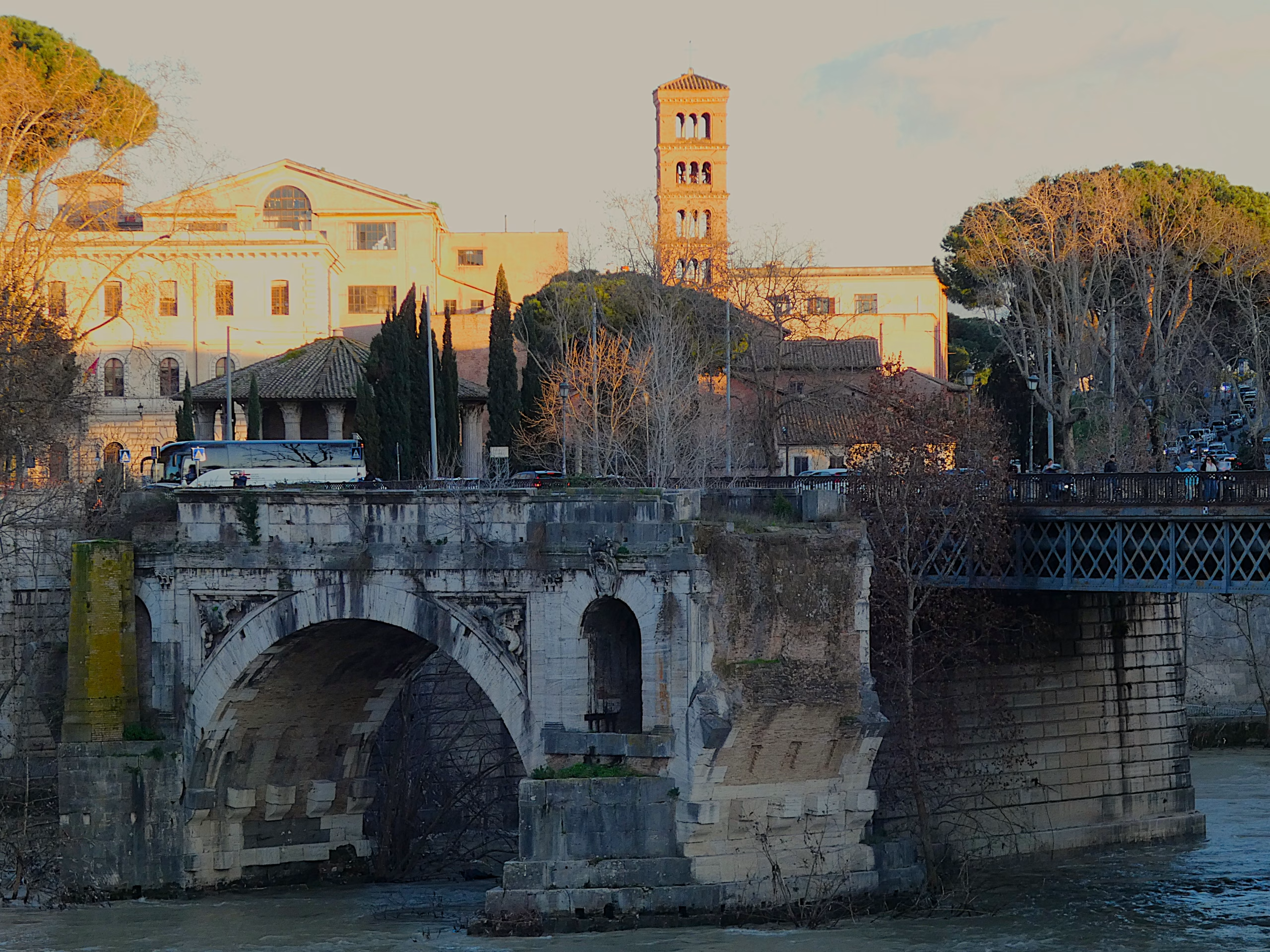
The Ponte Emilio owes its original name to Manlio Emilio Lepido, who probably constructed the bridge around the year 241 BC. Its construction coincided with the then newly laid Via Aurelia (the first stretch of which is now known as Via della Lungaretta).
In 179 BC, after a flooding of the Tiber, Marco Emilio Lepido and Marco Fulvio Nobiliore strengtened the foundations. This reconstruction was followed by other ones in 142 BC and in 12 BC. From then on, since the last reconstruction had been ordered by Pontefice Massimo Augusto, the bridge came to be known as Ponte Massimo.
The Ponte Massimo stayed Ponte Massimo until 872 AD, when Pope Giovanni VIII transformed the nearby Temple of Portunus into the church of Santa Maria Egiziaca. Consequently, the name of the bridge changed to Ponte di Santa Maria.
In the course of the centuries, the bridge collapsed several times.
Pope Giulio III ordered a reconstruction in 1552. Michelangelo was resonsible for the new design, but Nanni di Baccio Bigio made a bit of a mess of it. Five years later, the bridge collapsed again.
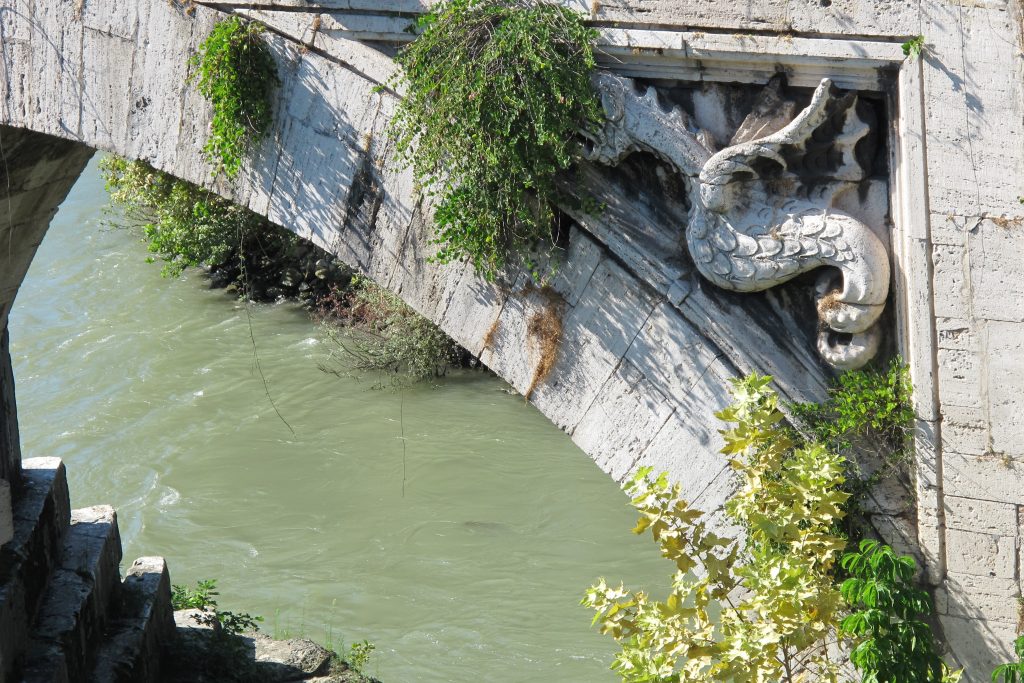
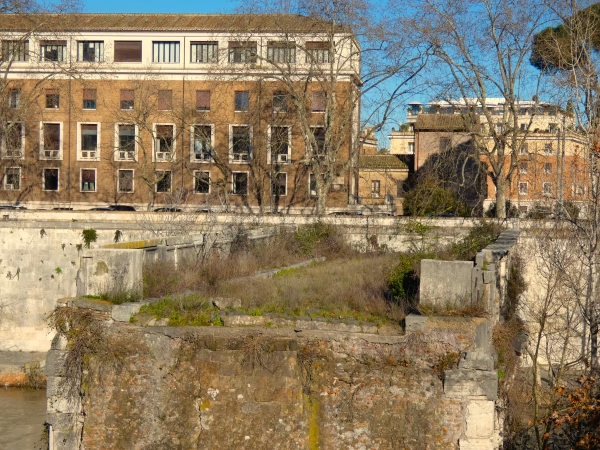
The bridge was only restored in 1853, and not even for very long. In 1887, most of the construction was destroyed, to make way for the new Ponte Palatino. Only one of its arches, not very well maintained and with the top part completely overgrown, remains.
Leave a Reply