
Prati is the 22nd rione of Rome. Although there are not that many big attractions in the district itself, the neighborhood is visited by many tourists. This is because both the Vatican City and the Castel Sant’Angelo are located just outside its borders. Prati, characterized by its straight and relatively wide streets, is considered one of the wealthier neighborhoods in the center of the city.
Top 10 tourist attractions Prati, what to see and do
01. Piazza Cavour
The Piazza Cavour is the central square of the Prat neighborhood. The entire south side of this square is taken up by the Palazzo di Giustizia. Other attractions are the Chiesa Valdese and the Cavour monument.
02. Palazzo di Giustizia

Athough the Palazzo di Giustizia occupies an entire side of the Piazza Cavour, most tourists will probably be more familiar with the even more impressive facade facing the river, on the other side. Construction began in 1888.
03. Piazza del Risorgimento

The Piazza del Risorgimento, constructed toward the end of the 19th century, is the second main square of the Prati neighborhood. Part of it borders the Vatican City. There are both a monument and a museum dedicated to the carabinieri.
04. Fountain of the Caryatids
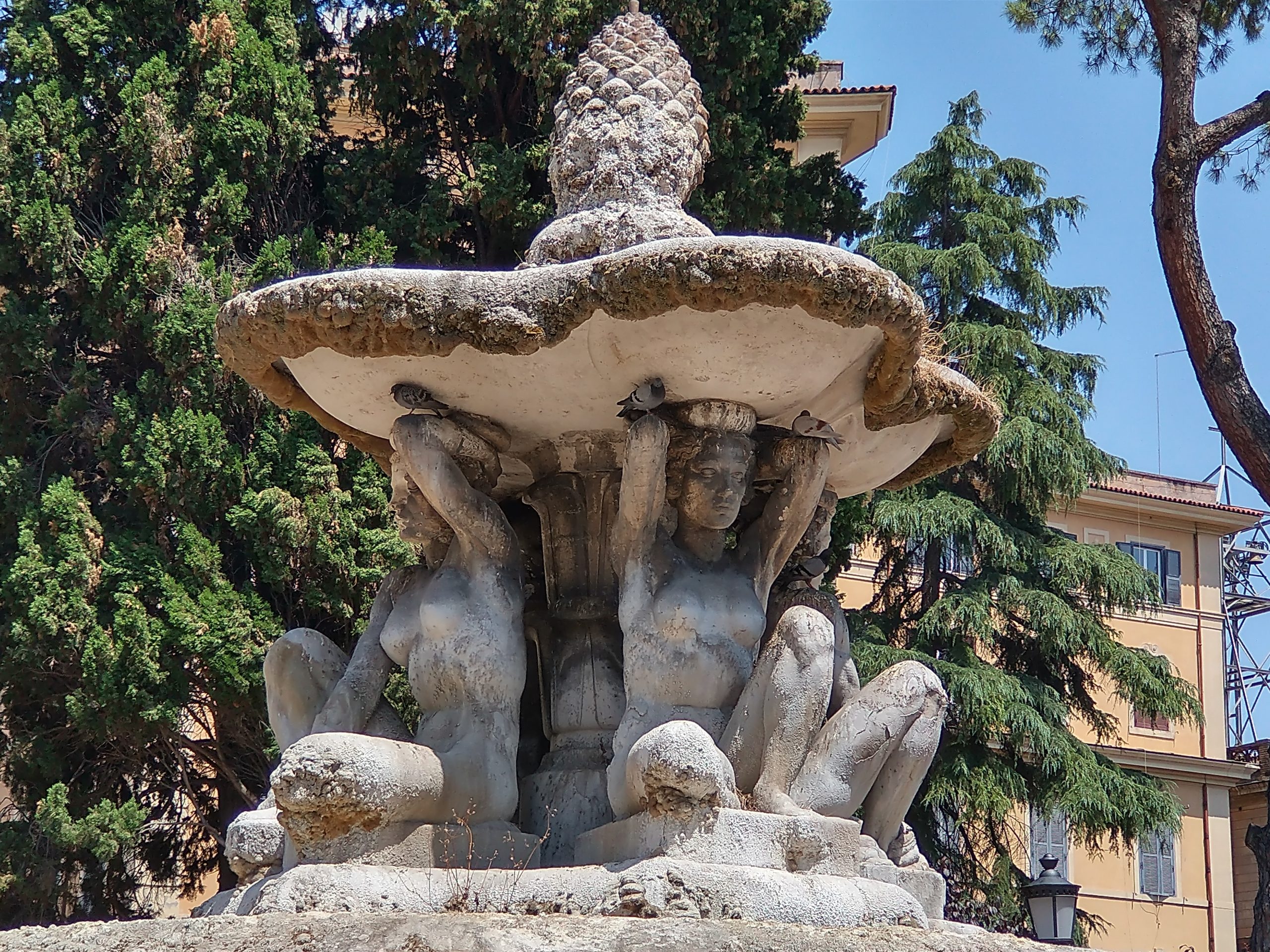
Designed in 1928, the Fountain of the Caryatids occupies central position in the Piazza dei Quiriti. Caryatids are sculptures of female figures serving as supports.
05. Sacro Cuore di Gesù in Prati Church

The Sacro Cuore di Gesù in Prati Church is also called the Sacro Cuore del Suffragio Church. The church has an impressive Gothic facade, which is sandwiched between modern buildings. Next to the sacristy is a small museum dedicated to the souls of purgatory are on display.
06. Villino Vitale

The Villino Vitale was built in the early 20th century. Built in an Art Deco style, the palace has since been transformed into a hotel. The most striking decorations are the swallows below the roof.
07. Piazza della Libertà

The Piazza della Libertà is located close to the river. This part of the district is characterized by its, sometimes rather whimsical, early 1920s architecture.
08. Villino Douhet

The Villino Douhet is an early 20th century building designed by Ernesto Basile. The building, which has a far more interesting interior than expected, but can only rarely be visited, is the current seat of the Associazione Arma Aeronautica.
09. San Gioacchino in Prati Church

The late 19th the century San Giocchino in Prati Church is located just off the Piazza dei Quiriti. The reason it not built in the square itself is that the Catholic Church was not very popular in the immediate aftermath of the Unification of Italy. Newly built churches were thus often relegated to side streets.
10. Tiber Bridges

Four different bridges connect Prati to the historical center. These are the Ponte Umberto I, the Ponte Cavour, the Ponte Regina Margherita and the Ponte Pietro Nenni.
Shopping in Prati
The Via Cola di Rienzo is now one of Rome‘s most important shopping streets. The Via Ottaviano, between the metro stop of the same name and the Vatican City, is lined with shops catering mostly to tourists.
Market
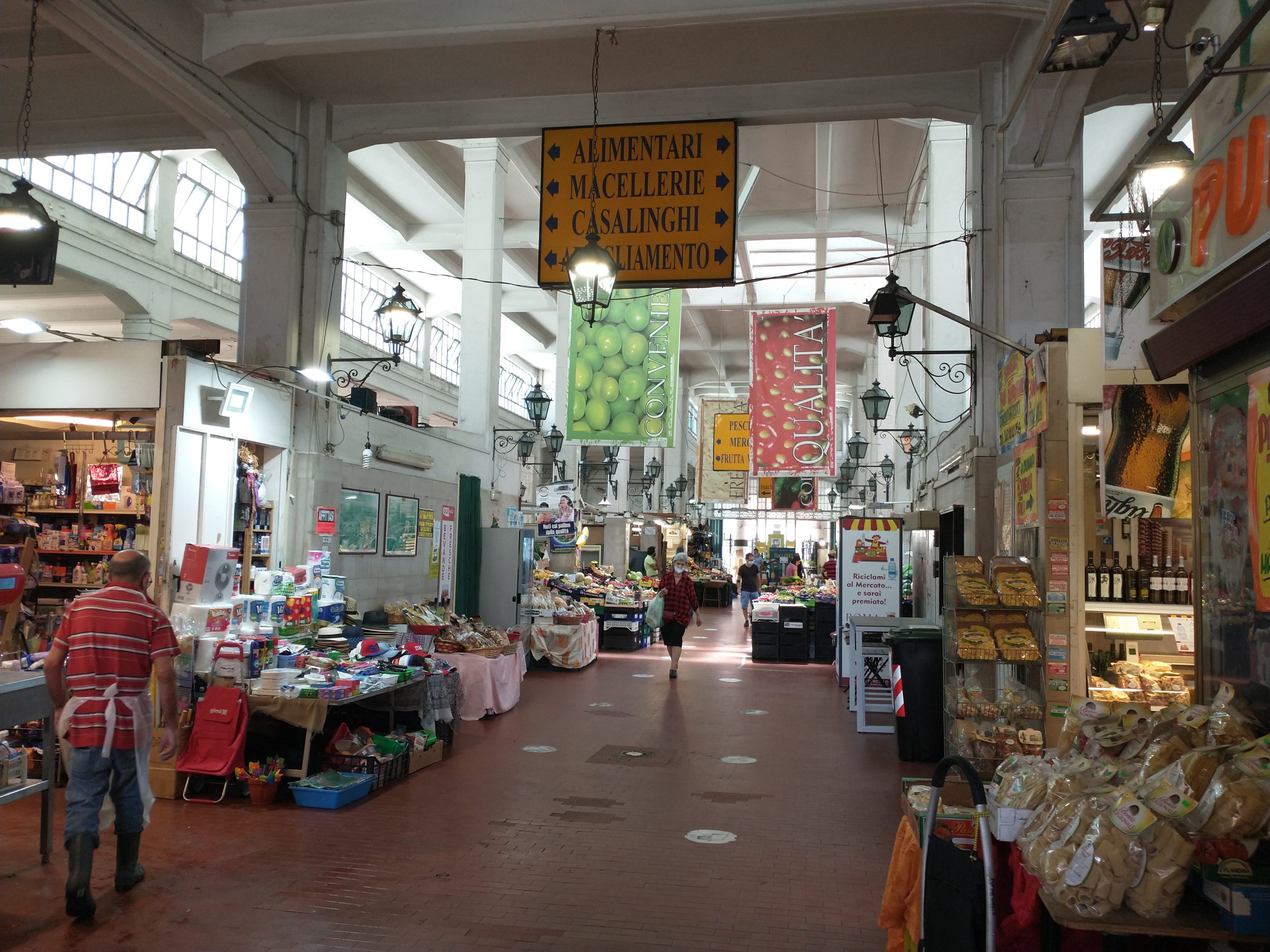
The main market is the indoor Mercato dell’Unità in the square of the same name. Founded in 1928, this is still the go-to market for the restaurant owners of the district for fresh food.
Eating and drinking in Prati
Since Prati is a relatively new neighborhood, it lacks the atmosphere of the picturesque alleys and piazze of nearby Borgo and Trastevere.
One recommended spot is Alexanderplatz, the city’s oldest and most famous Jazz Cafe, which also offers excellent food.
LUMSA University
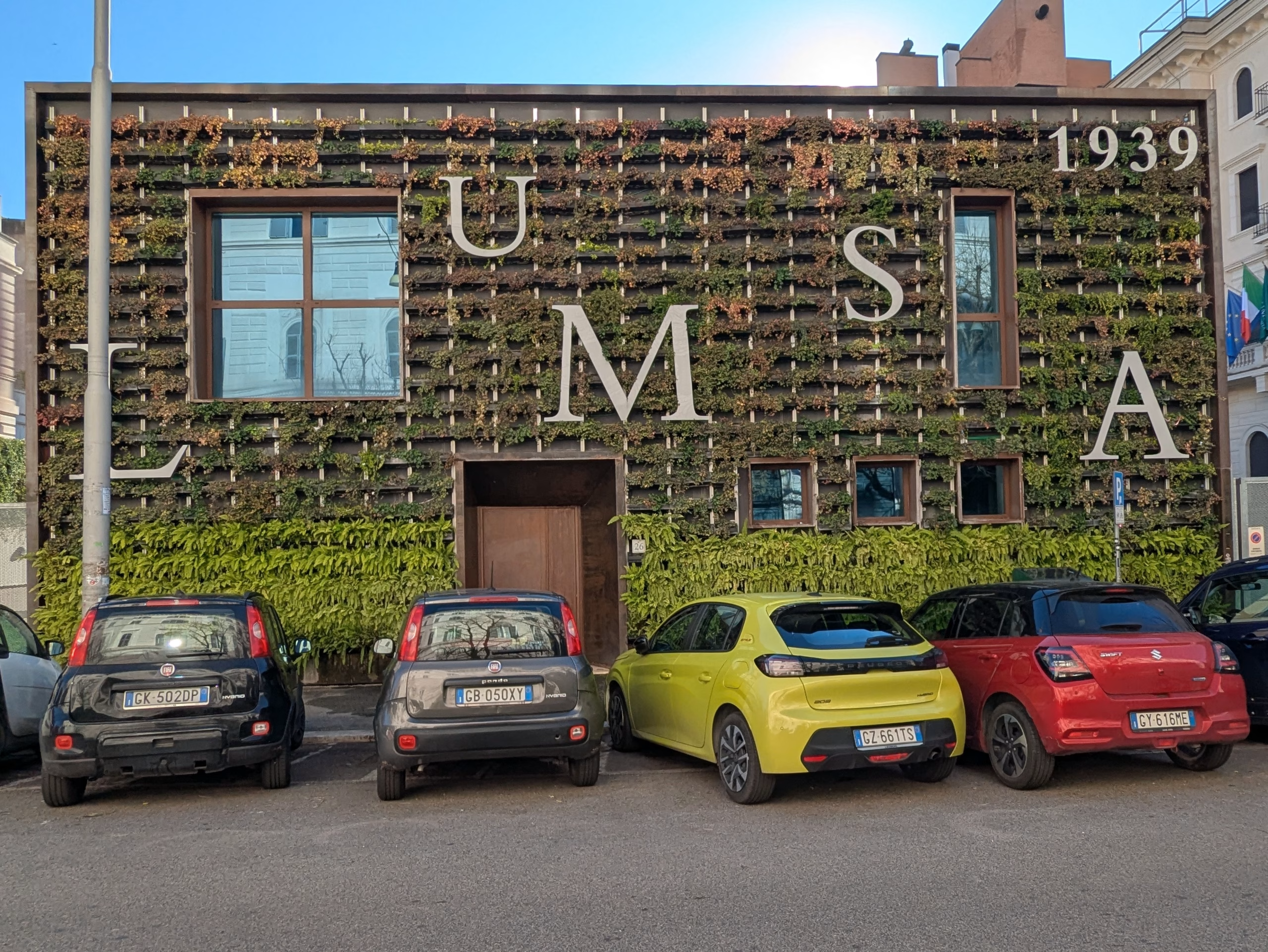
The LUMSA was originally an educational institute for nuns founded in 1939 by Luigia Tincani. In 1989, it was reconstituted as “Libera Università Maria SS. Assunta” (LUMSA), a private Catholic university for women. In 1991, the university was also opened to men. The main building is instantly recognizable because of its vertical garden.
Public transportation to the Prati neighborhood
The Prati neighborhood is well connected to the historical center. The metro stops Lepanto and Ottaviano are located in the northern part of the district. The Piazza del Risorgimento is the capolinea of tram line 19 and of several bus lines to the center.
A brief history of the rione Prati
The area now called Prati used to be known as Horti Domitii, because the wife of Emperor Domitian owned almost the entire area in order to cultivate vineyards. Later the name was first changed into Pratis Neronis (“Nero’s field”) and subsequently into Prata Sancti Petri (“fields of Saint Peter”), because of its location near the Vatican.
The area came to mainly be used for vineyards and vegetable gardens, with an occasional country house or hunting lodge.
Until 1870, when Rome was again divided into rioni, the army used Prati for military exercises and it came to be called Piazza d’Armi. The city continued its expansion, however, and a big part of Prati came to be used for the construction of government buildings and houses for the people working in those buildings.
In those days, there was animosity between the Vatican City and the Italian State and new streets constructed in Prati were all designed in such a way that they never showed a view of Saint Peter’s Basilica. The most important streets were named after Italian freedom fighters. The central square was obviously called Piazza di Risorgimento.
Construction of new buildings was difficult. Enormous amounts of sand had to be transported to the area to ensure that e.g. the Palazzo della Giustizia would not sink into the earth in case the Tiber flooded.
Even though most of the buildings are new, at least for Roman standards, in 1921 Prati officially became the 22nd rione of the city.
Case popolari
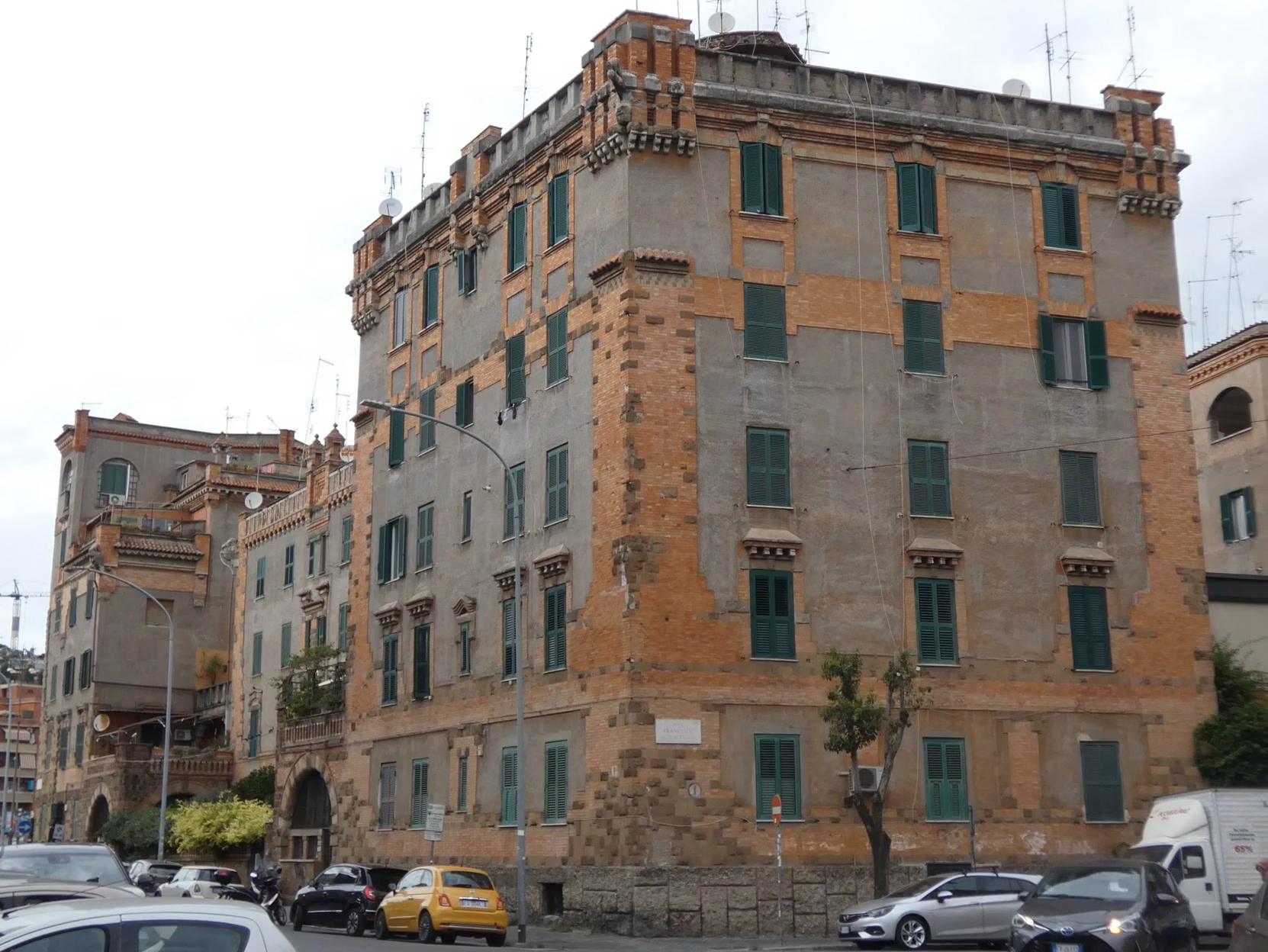
Between 1919 and 1922, the complex ICP Trionfale II was built by the modernist architect Innocenzo Sabbatini. There was a housing crisis in the city, and the Istituto Case Popolari had been founded to create affordable living spaces for working people. Similar apartment blocks were constructed in neighborhoods such as Garbatella, San Saba and Ostiense.
Curiosities
Prati‘s coat of arms shows the Mausoleo di Agosto (now known as Castel Sant’Angelo), which is located in the rione Borgo.