
The church of Saint Charles at the Four Fountains (San Carlo alle Quattro Fontane) is a baroque church in Rome. It is designed by Borromini, who did however not manage to finish the work before his death. Because of its small size it is better known as San Carlino Church.
A brief history of the church of San Carlino in Rome

The San Carlo alle Quattro Fontane Church was founded in 1638 and incorporated in the convent of the Spanish order of the Barefoot Trinitarians (Trinitari Scalzi), who had also been responsible for commissioning construction of the church. It is dedicated to the 16th hcentury cardinal San Francesco Borromeo.
Construction of the church had not yet been completed in 1667, when Borromini died. He ought to have been buried inside the church, and a spot had already been chosen, but since he committed suicide he was buried elsewhere, in the San Giovanni Battista dei Fiorentini church in the Via Giulia.
Borromini designed the entire church, including the cloister and crypt. The latter was used as a cemetery until the time of Napoleon (early 19th century). From then on burials had to take place outside the city walls. Structurally, the crypt was meant to protect the church itself from humidity. It has exactly the same dimensions as the church itself.
After Borromini‘s death, his work was continued by his nephew Bernardo Castello Borromini, who was responsible for the top floor and the bell-tower, although he used his more famous uncle’s designs.
Borromini was apparently quite demanding. The procuratore generale of the Trinitarian Order, Juan de San Bonaventura, in his “Libri della Fabbrica”, describes how the architect often seemed to want to “take over the saw from the carpenter, the chisel from the bricklayer, the file from the blacksmith”, and so on.
San Carlo alle Quattro Fontane is often compared to the nearby Saint Andrew’s at the Quirinal, which was designed by Borromini‘s big rival, Gian Lorenzo Bernini.
What to see in San Carlo alle Quattro Fontane
Facade
The facade, which was completed about 30 years after the rest of the church, is divided into six parts. The central part of the bottom half is convex, while the external parts are concave. The top half consists of three concave parts. The status of San Carlo in the central niche above the portal was made by Antonio Raggi between 1475 and 1480. The fountain on the left corner is one of the Quattro Fontane and symbolizes the river Tiber).
Church interior
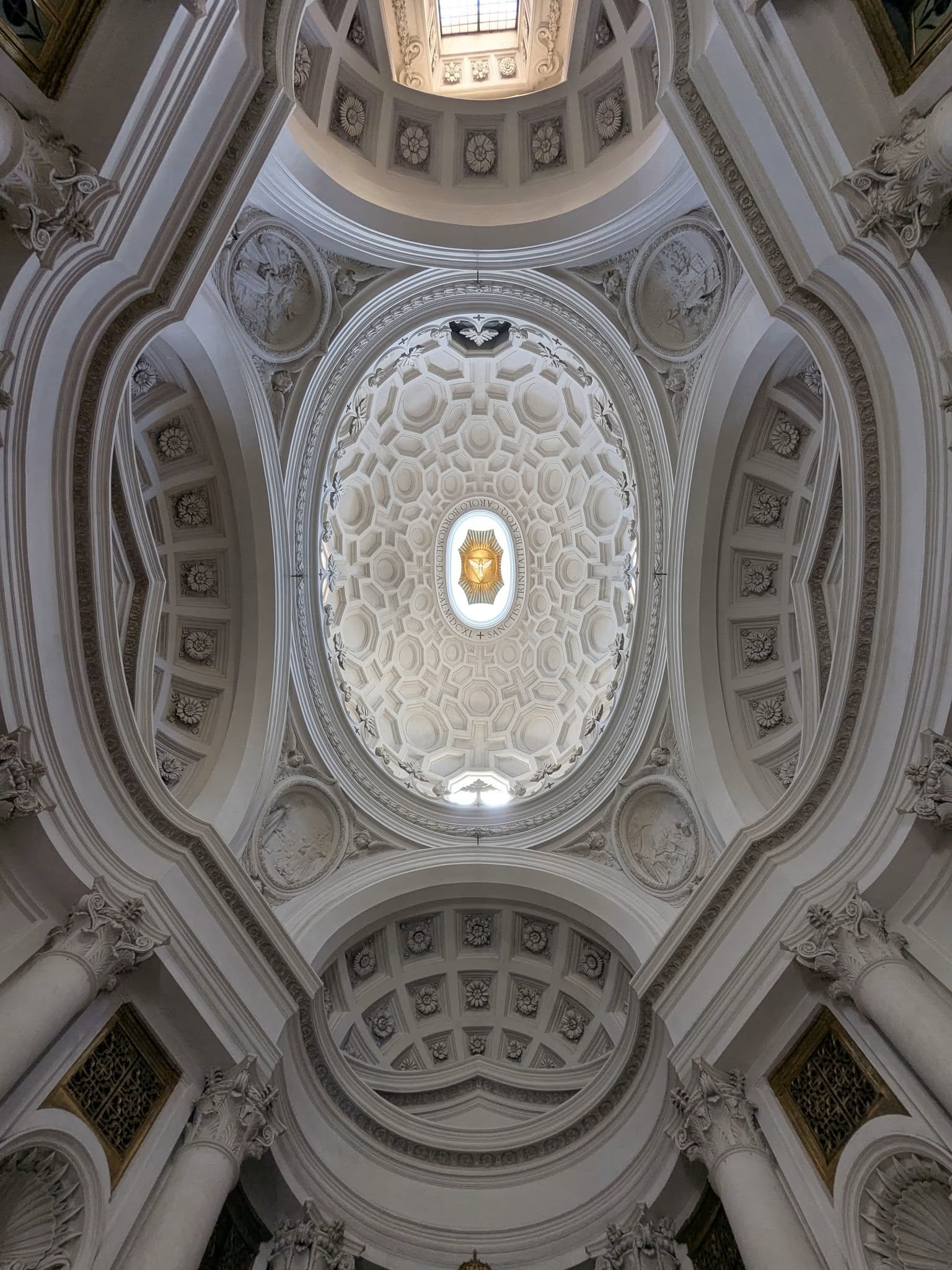
The floor plan is oval, with side walls that seem to bulge outward in a similar way to the central part of the facade. The roof, with its oval cupola, sort of mimics the floor plan. The octagonal spaces in the coffered cupola become smaller towards the depiction of the Holy Spirit in the center, which makes it look taller than in actually is.
Altars
The fresco above the main altar depicts “San Carlo Borromeo with the founders of the Trinitarian Order, Saint John de Matha and Saint Felix of Valois, in adoration of the Holy Trinity”. It was painted by Pierre Mignard. The urn containing the remains of Blessed Isabel Canori Mora is preserved below the altar.
Prospero Mallerini‘s “Ecstasy of Saint John the Baptist of the Conception”, aadorns the left side altar, and Amalia de Angelis‘ “Ecstasy of Saint Michael of the Saints” the one on the right.
Barberini Chapel
The Cappella Barberini is located to the left of the main altar. In 1994, it was dedicated to the Blessed Isabel Canoni Mora. The chapel contains a “Holy Family Resting in Egypt”, by the 17th century painter Giovan Grancesco Romanelli.
Cloister
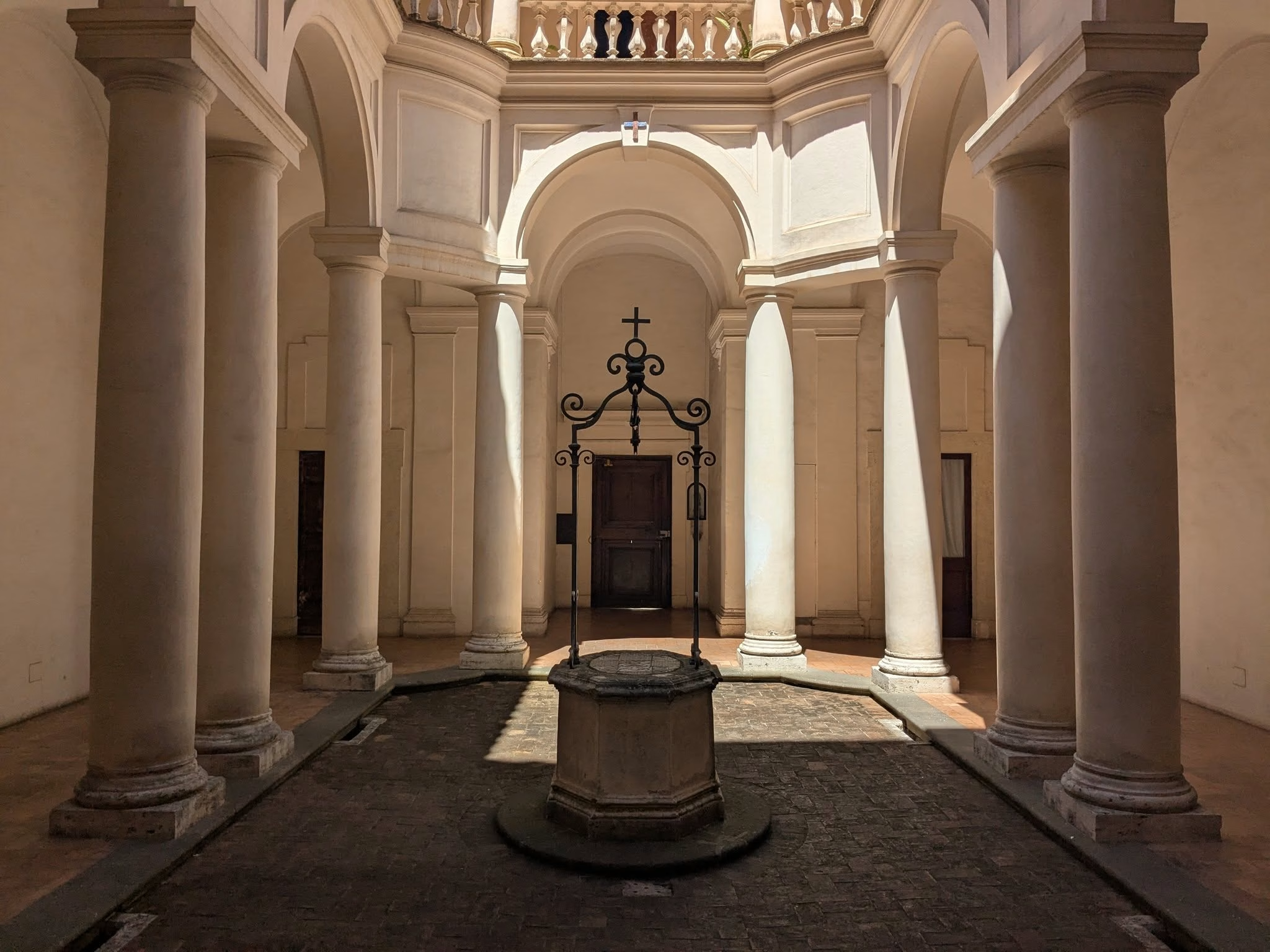
Although the cloister is rectangular, the portico surrounding it is octangular, with slightly convex corners. What is also unusual, is that the spaces between the Doric columns are not all of equal width. Apart from the central well, closed with a beautifully decorated cover, the cloister is completely unadorned.
Crypt
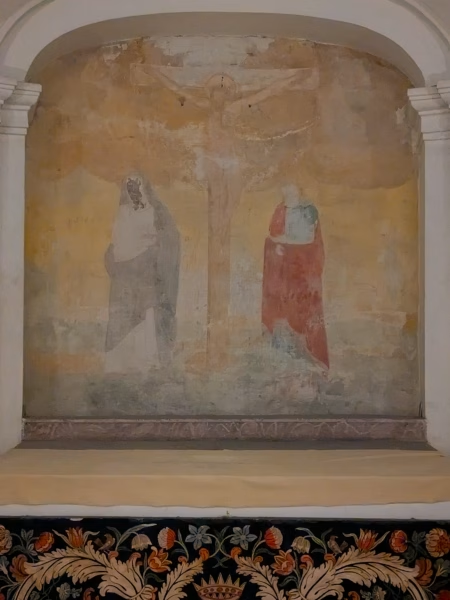
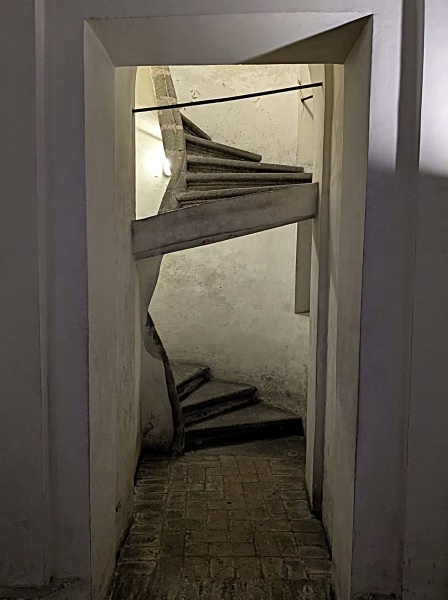
The sparsely decorated crypt has the same floor plan as the church itself. It has two side chapels, in one of which Borromini had planned for himself to be buried. The altar is decorated with a fresco depicting the crucifixion. The room where the architect was supposed to be buried is off to the left. A very small window is its only source of light.
Address, opening hours and admission
Address: Via del Quirinale, 23 – Rome (tel. +39 06 4883261). Opening hours: Mondays to Fridays from 10.00 till 13.00 and from 15.00 till 18.00. Saturdays, Sundays and the entire months of July and August: 10.00 till 13.00. Opening hours crypt: Mondays to Saturdays from 10.00 till 13.00 and from 15.00 – 18.00; Sundays from 12.00 till 13.00. Admission: Free. (A donation of 2 Euros is expected for a visit to the sacristy, cloister and crypt, though.)
Leave a Reply