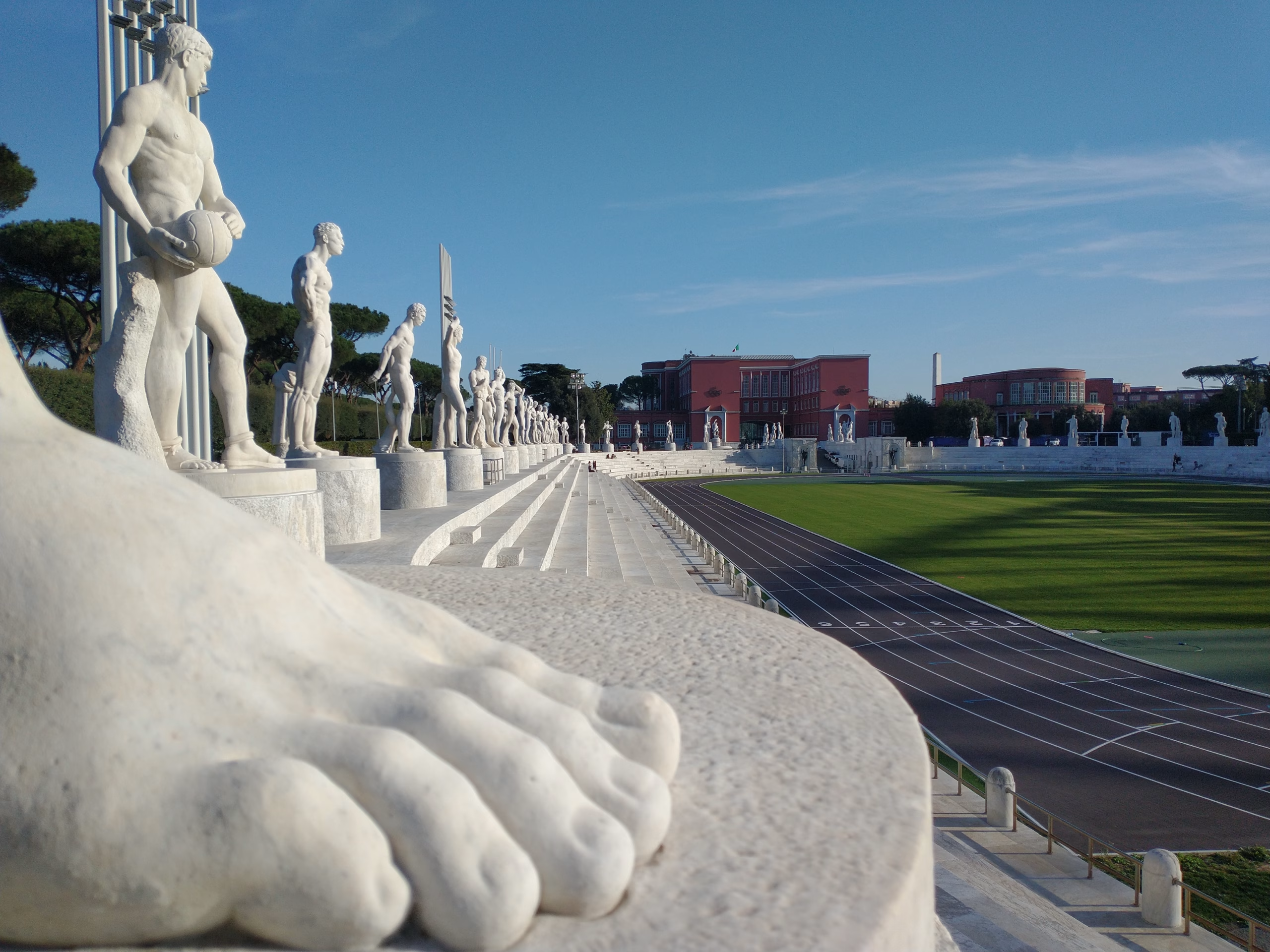
The Stadio dei Marmi is part of the Foro Italico, Rome’s biggest sports complex. The stadium owes its name to the enormous 4 meter tall statues of naked and very muscular male athletes lined up around the track. In 2013, it was renamed for the former 200 meter flat world record holder Pietro Mennea.
A brief history of the Stadio dei Marmi in Rome
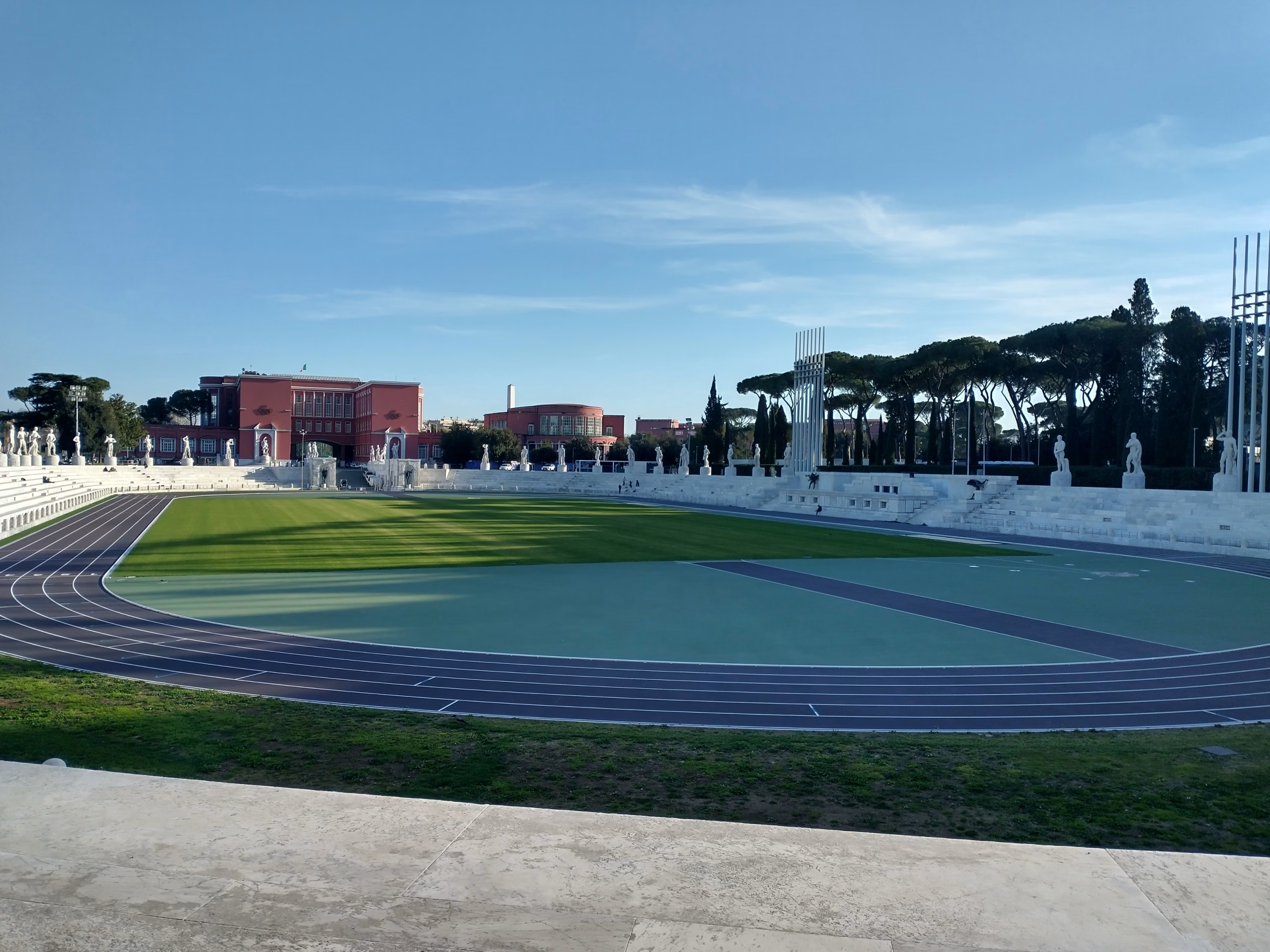
The Stadio dei Marmi was originally meant to be a training ground for the Fascist Men’s Academy of Physical Education. The architect of the Foro Italico, at the time still called Foro Mussolini, was Enrico Del Debbio. Construction of the entire complex only took four years, from 1928 till 1932. The motive for this haste was that the fascist regime hoped to meet the qualifications for organizing the 1944 Olympics. In the end, because of the outbreak of World War II, these Olympics were never held.
The stadium is made of the famous white marble of Carrara. It has a capacity of over 5,000 seats. In order to build it, Del Debbio had the area around the track raised by around 5 meters.
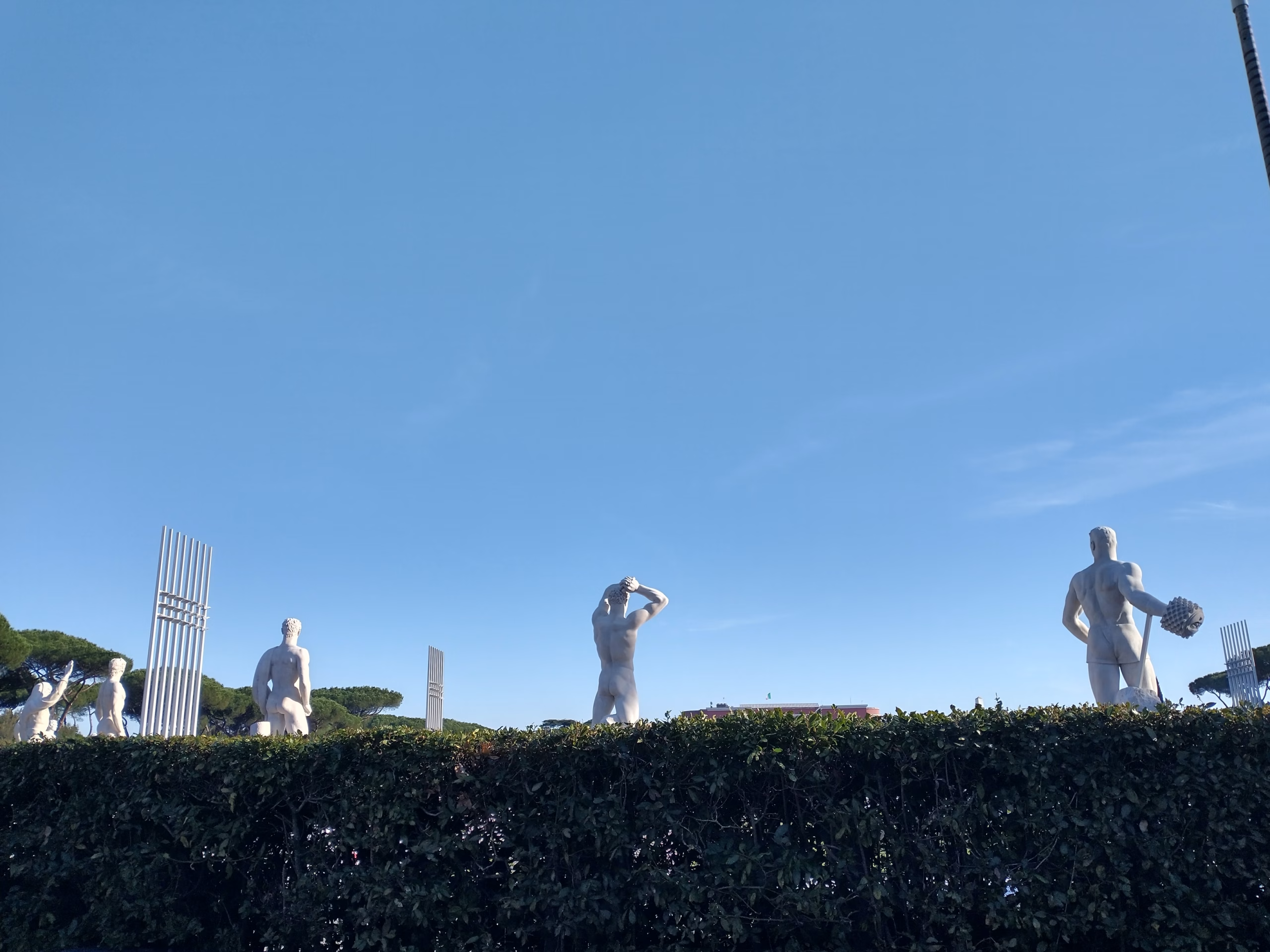
Around 20 different artists were responsible for the 60 statues lining the track. 60 (at the time there were 94) provinces paid for one statue each. The names of these provinces are visible on the pedestals. The athletes are depicted in various disciplines. The muscular portrayals were supposed to establish a connection between physical activity and fascist ideology.
10 of the statues were the work of Aroldo Bellini (1902-1984), who was also responsible for the bronze statues depicting two pairs of athletes competing in freestyle and Greco-Roman wrestling and for the bronze javelin thrower and archer in the large niches carved into the base of the access ramp.
Angelo Canevari created the mosaic depicting 8 athletes at near the entrance.
How to get to the Stadio dei Marmi
Bus: 32, 69, 280, 301, 628.
Sources
- Touring Club Italiano – Rome.
- Photos are my own, unless otherwise indicated (©RenatoProsciutto)