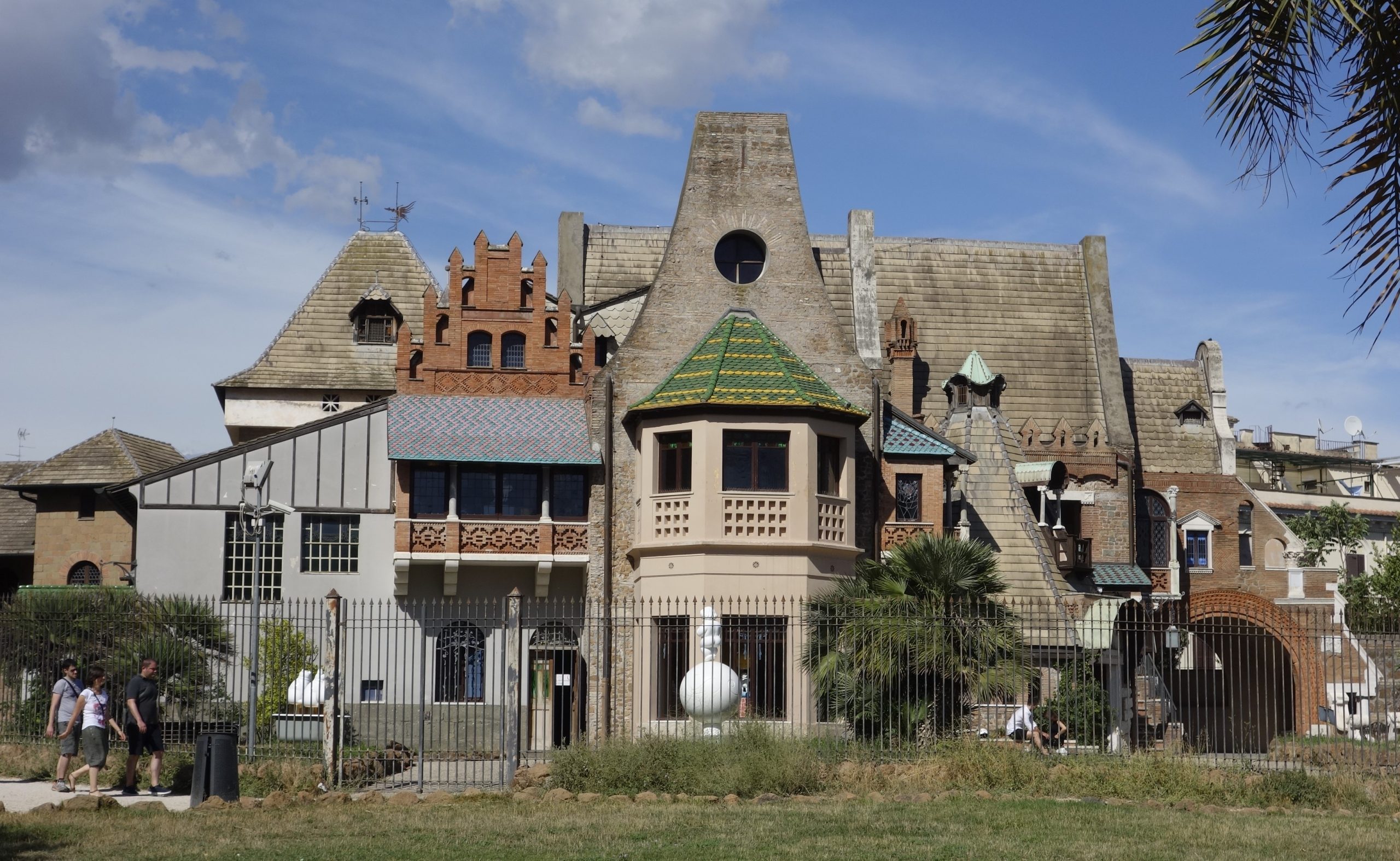
The Villa Torlonia Park is a medium-sized park on the Via Nomentana in Rome. The bigger buildings inside the park host temporary exhibitions. There is also a kind of children’s museum for children called Technotown and there are two obelisks and several copies of Roman monuments. Highlight is the fairy-tale like Casina delle Civette with its ornate stained-glass windows.
A brief history of the Villa Torlonia Park in Rome
In the 17th century, the area was part of an estate with a central country house belonging to the Pamphilj family. In 1797, the property came in the hands of the Torlonia and got its current name. Giovanni Raimondo Torlonia had the country house transformed into a residence. One of the architects was Giuseppe Valadier.
In 1832, his son Alessandro Torlonia had the architect Giovan Battista Caretti renovated, amplify and further decorate the villa. Between 1839 and 1840, Giuseppe Jappelli designed the Serra Moresca and the Campo da Tornei.
Giovanni Torlonia ordered yet another renovation, before offering the villa to Mussolini for a rent of 1 Lira per month in 1925. Mussolini made it into his official residence, while Torlonia moved into the Casina delle Civette, to stay there till his death in 1938.
The Villa Torlonia became a public park in 1977. In the 1990s, the city ordered an extensive renovation. In 2013, the Serra Moresca and the tower, as well as the Theatre, were completed. A year later, it was the turn of the bunker and the air raid shelter in the Casino Nobile.
What to see in the Villa Torlonia
Casina delle Civette
The Casina delle Civette (“Little House of Owls”) began its existence as the “Swiss Hut” and is one of the most fairy-tale-like buildings in Rome. The name derives from its decorations. The Casina often hosts temporary exhibitions.
Casino Nobile
The Casino Nobile is the largest building in the Villa Torlonia and was designed by the famous architect Giuseppe Valadier, who was also responsible for the current appearance of the Piazza del Popolo.
Mussolini’s Bunker
Between July 1943 and May 1944, Rome was bombed 51 times. Mussolini, who had chosen his residence in the Casino Nobile, had a bunker and an air raid shelter built under the building. The exhibition sheds light on the kind of life Mussolini led in the Villa Torlonia, on life inside a shelter, on what it is like being inside a bunker during a raid and on the bombings of, especially, the San Lorenzo neighborhood.
Casino dei Principi
The Casino dei Principi (“House of Princes”) was a modest country house, enlarged and embellished by Valadier in the early 19th century. Its current appearance is the result of a later renovation, under Giovan Battista Caretti.
Teatro Torlonia
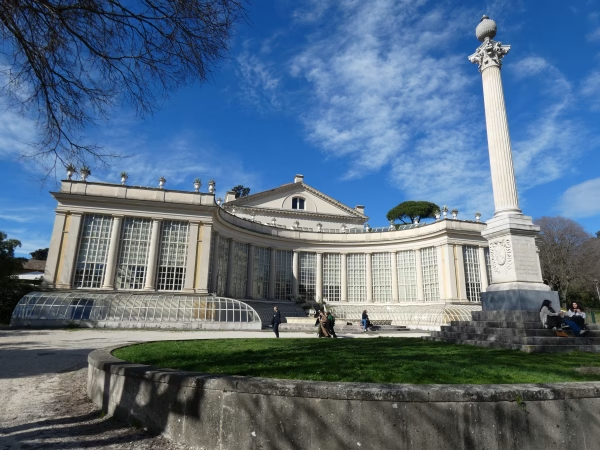
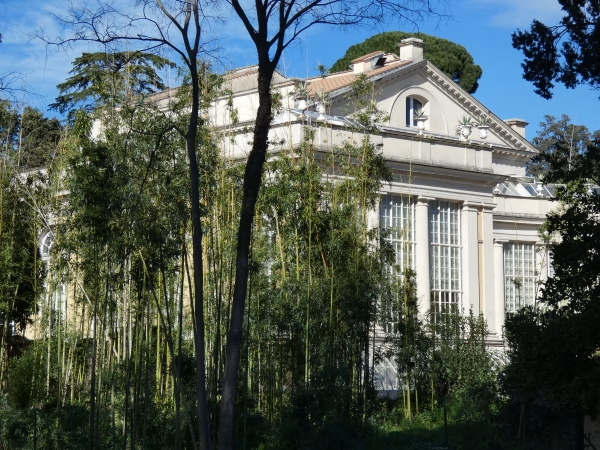
The Teatro Torlonia was commissioned by Prince Alessandro Torlonia in 1841 to celebrate his marriage to Teresa Colonna. The architect was Quintiliano Raimondi. The work, which was interrupted for various family and political reasons, was not completed until 1874. The theatre was reopened in 2013, after a restoration.
Technotown
Technotown is a cross between a museum and a playground, where children between 8 and 17 can learn about technology through play. It is located in the Villino Medioevale (Medieval Cottage) in the park.
Serra Moresca
Inspired by the Alhambra in Granada, the Serra Moresca is characterized by its It is characterized by its polychrome stained-glass windows, use of peperino stone and cast iron. Built by Jappelli, the exotic Serra Moresca was meant to contrast with the Swiss Cottage.
“Roman” monuments
Here and there in the park are buildings and structures that try to look like they are from ancient Roman times. However, these are only copies.
Jewish catacombs
The Jewish Catacombs are not open for visitors yet.
Obelisks
The two obelisks were mounted in 1842. They are constructed from granite originating from Baveno and copied after Egyptian examples. They were manufactured in northern Italy and transported to Rome largely by water, first following the river Po and then by sea to the mouth of the Aniene. The journey took almost two months. Once the ship had arrived in Rome, 8 more days were needed to get the obelisks to the Villa Torlonia itself. They were placed in the park on respectively June 4th and June 26th. Among the guests Pope Gregorius XVI and King Luigi I of Bavaria stood out.
Villino Rosso
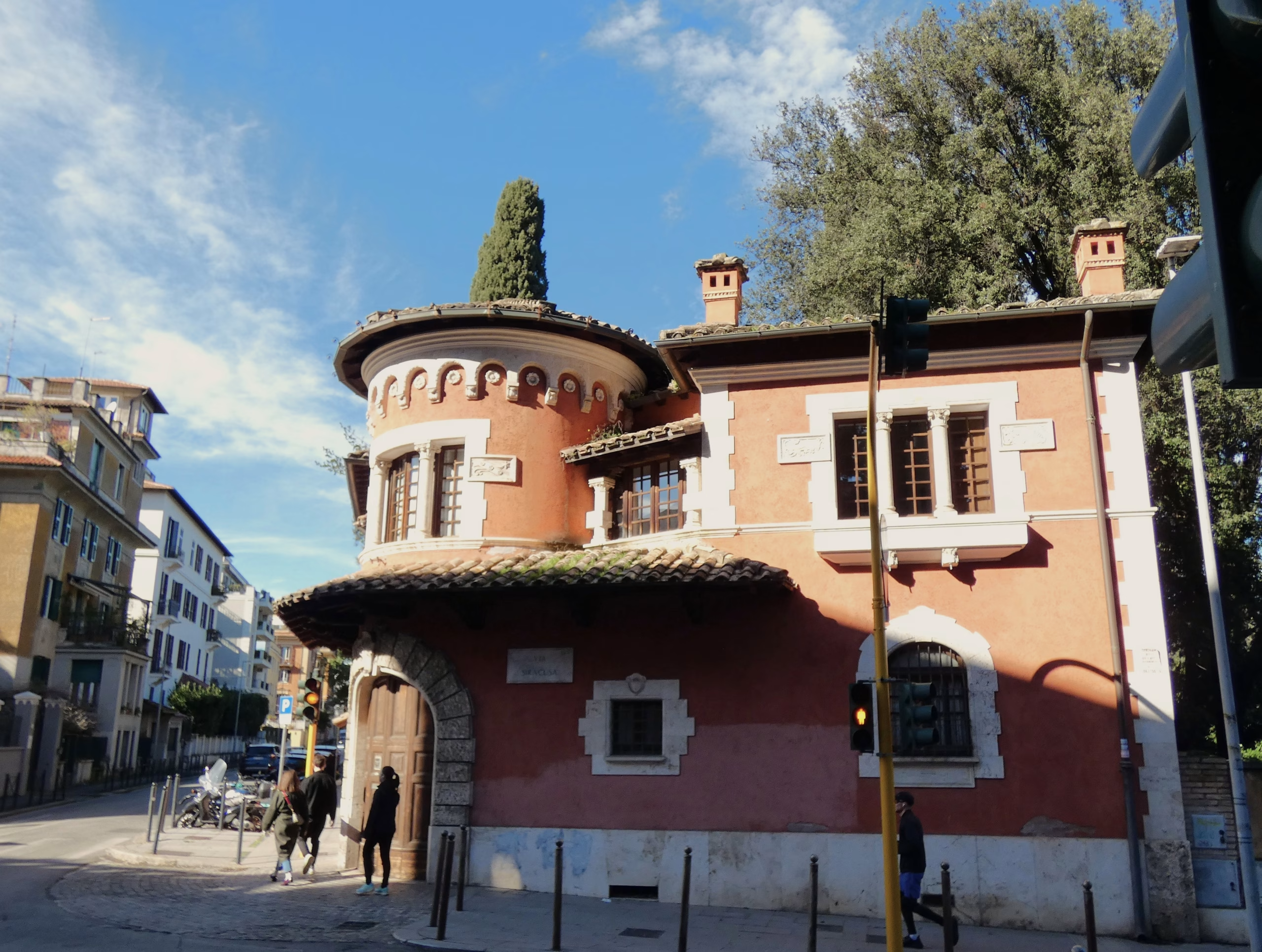
The building known as Villino Rosso is located on the southwestern corner of the Villa Torlonia. Dating back to the early 1920s, it was designed by Vincenzo Fasolo. It is currently the seat of the Accademia Nazionale delle Scienze detta dei XL.
What to know before your visit
The address of the Villa Torlonia is Via Nomentana, 70 – 00161 Rome (tel. +39 060608. This is the information number of the city of Rome, no number is available for the park itself). There is a bus stop (Nomentano-Torlonia: 60, 60, 82, 90, N4) right in front of the entrance. From Termini you should take bus 90. The park is open from 09.00 to 19.00 (on 24 and 31 December from 09.00 to 14.00). It is closed on Mondays, December 25, January 1 and May 1. The park is free to enter. A ticket for the Casino Nobile and the Casina delle Civette costs 8.50 Euro. Admission to only the Casino Nobile is 6.50 and to only the Casina dell Civette 5 Euro. EU residents between 6 and 25 and over 65 get 1 Euro discount per museum. Children under 6 get in for free. The Roma Pass is valid at the museums of the Villa Torlonia.
Leave a Reply